Butter Chicken
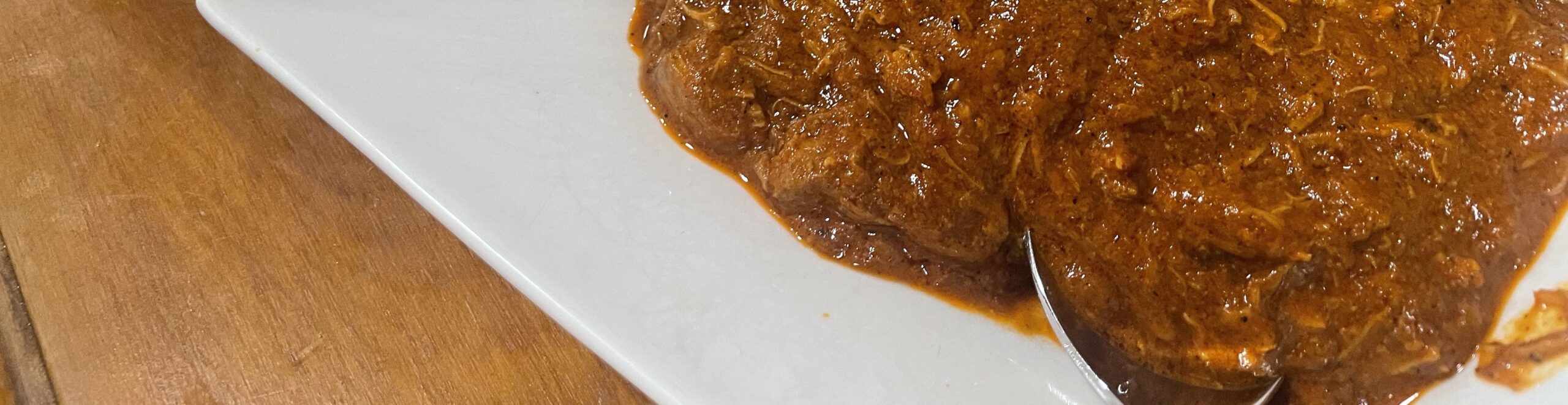
I have been searching for many years for a butter chicken recipe that tastes like an authentic restaurant experience. I don’t mean authentic Indian experience, just something I would get in New Zealand or Australia if I got a really nice takeaway. This is my best approximation of that! I print and laminate all my recipes out to use at home, but mum wanted this one so here it is, with pictures.
Ingredients . shopping list
Things you will need:
- Pressure cooker, slow cooker or big pot
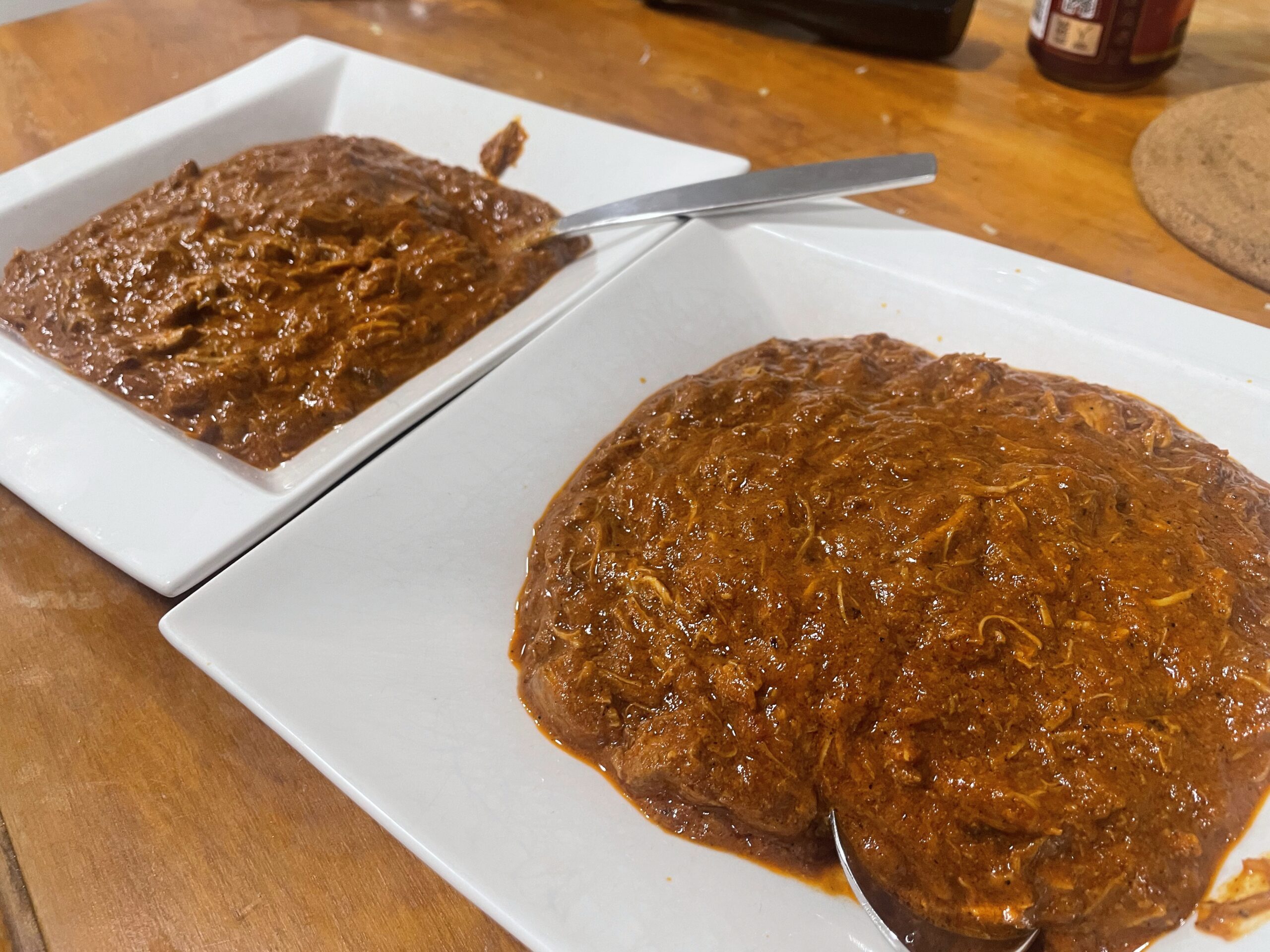
Per 1.2kg of raw chicken, makes about 2kg food in total, good for 2.5 meals for 2 people
- 1.2 kg chicken thigh fillets (no bone, “cutlets” typically have bone in them)
- 2 x 400g canned tomato
- 1 x 400ml can of coconut cream
- 1 x 240g Greek yoghurt
- 1 onion
Consumables
- tomato paste
- ghee (clarified butter – you can use normal butter instead)
- crushed garlic
- crushed ginger
- cashew nut butter
- garam masala
- cumin (ground)
- chilli powder
- sweet paprika (ground)
- turmeric (ground)
- salt
- sugar
Method
Early prep:
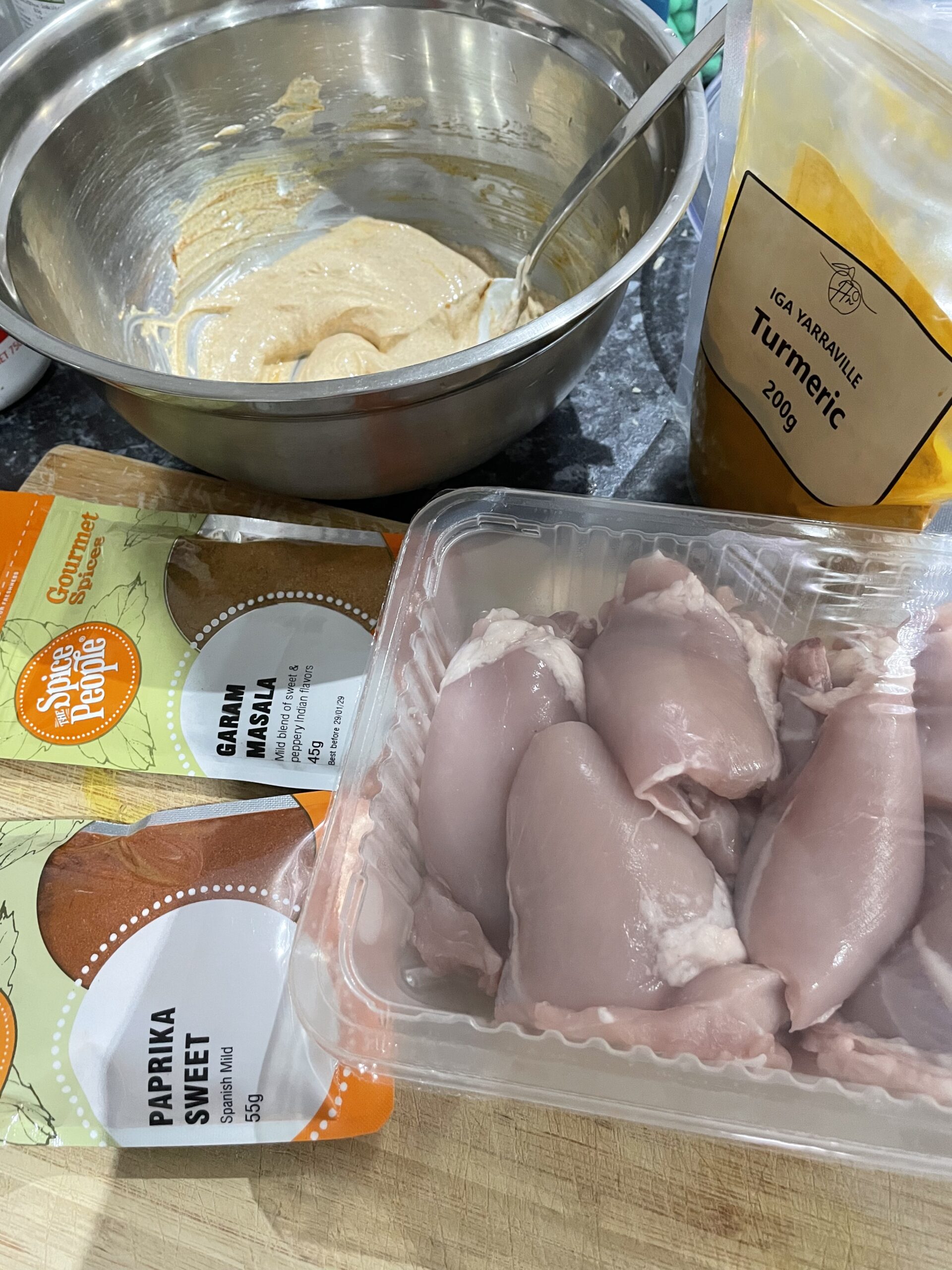
Put the Greek yoghurt into a medium sized bowl
Add to the yoghurt:
- 1 tsp sweet paprika
- 1 tsp garam masala
- 1/2 tsp tumeric
- 1/2 tsp salt
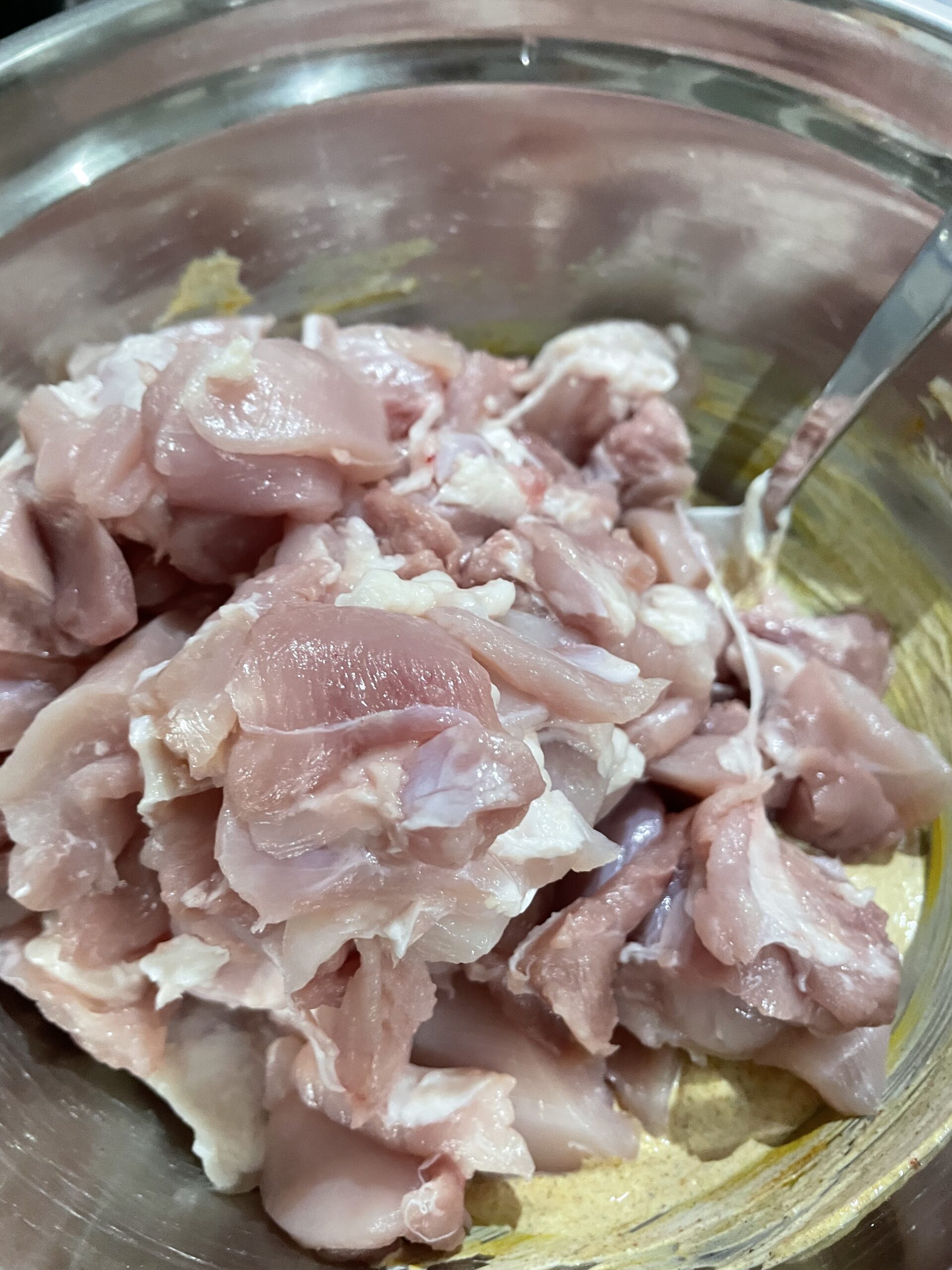
Cut the chicken into cubes about 1 inch in size
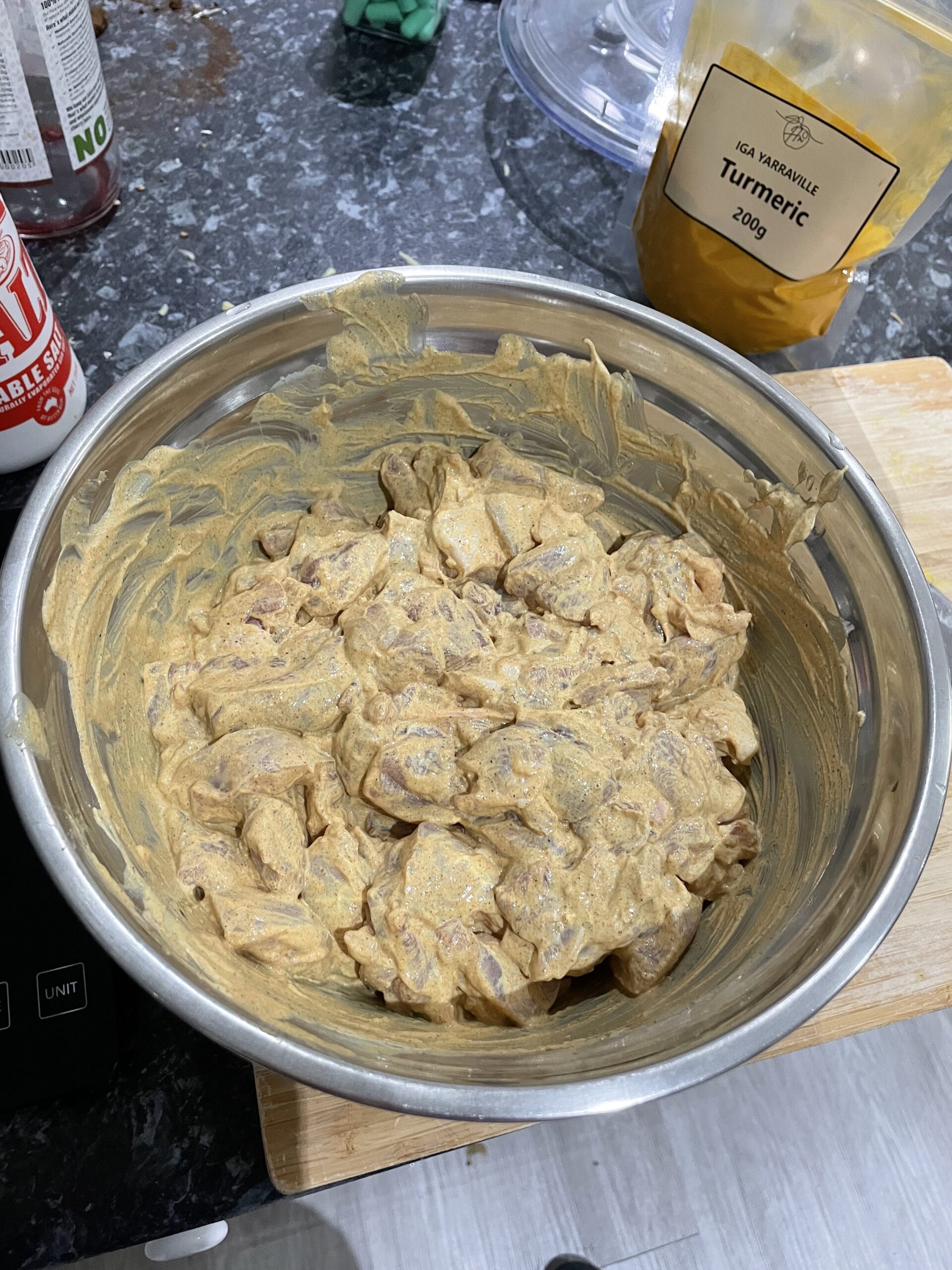
Toss chicken in the yoghurt mix
Put this in the fridge for up to 24 hours
In the moment:
Add 2 cans of tomato to the pressure cooker, set to heat up the pressure cooker (you can skip this if using an ordinary pot)
Measure spices into a small bowl:
- 2 tsp sweet paprika
- 2 tsp garam masala
- 1 tsp cumin
- 1 tsp tumeric
- 0 – 2 tsp chilli powder (0 for not hot, 2 for hot)
Dice 1 onion and start browning it in 1 tablespoon of ghee (or butter) in a stainless-steel pot
Add 1 tablespoon each of ginger and garlic
Brown the onion, ginger and garlic
Dump spices, and bloom them (you want them to darken and become fragrant, not to blacken
Add cooked onion / spice mix to pressure cooker
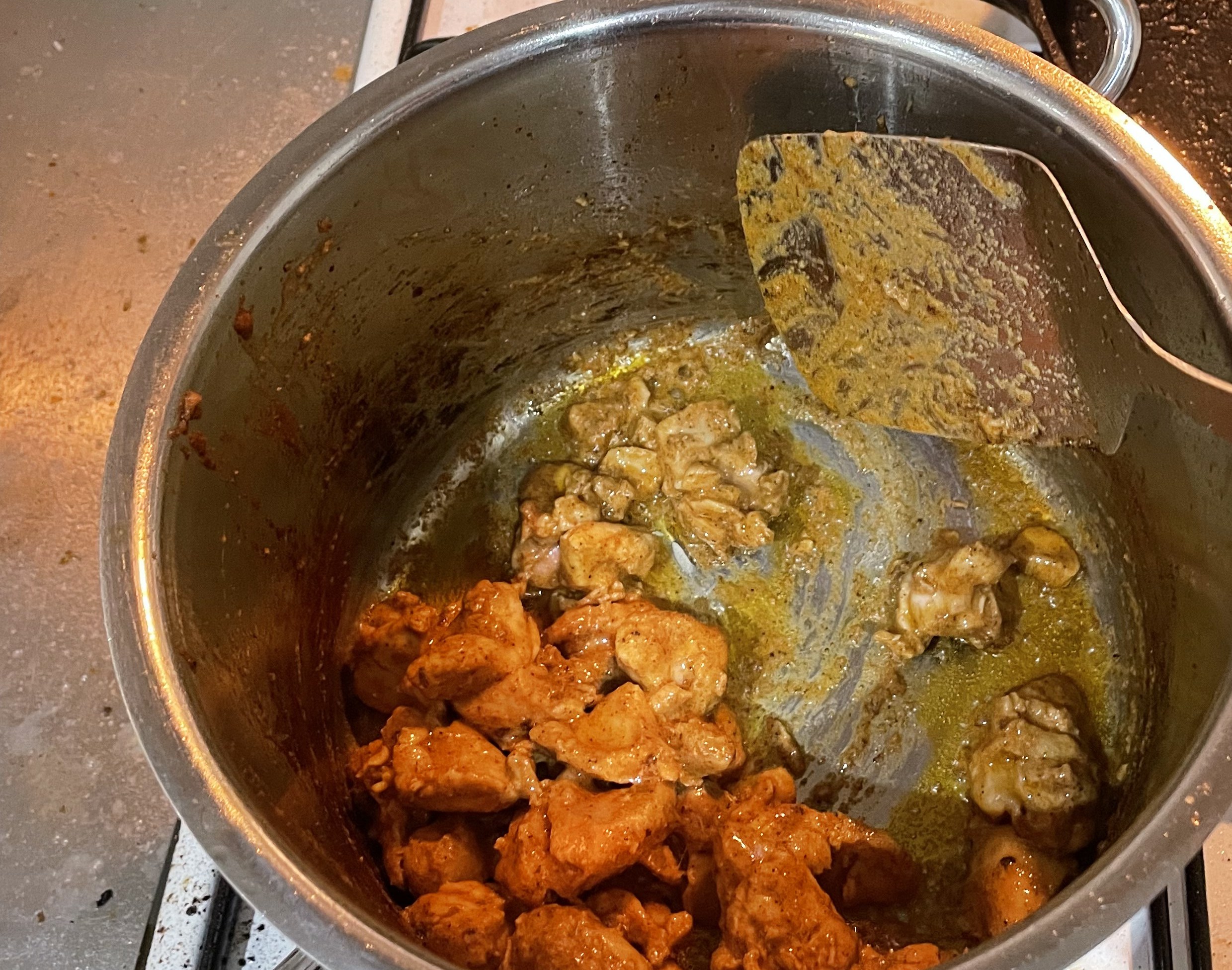
Brown the chicken from the fridge using ghee in small batches in the same stainless-steel pot.
Add chicken to pressure cooker, cook on high pressure for 10 mins. Alternatively cook in normal pot for 40 minutes
Add and mix through
- 2 tbsp cashew butter
- 3 tbsp tomato paste
- 1 tbsp ghee (or butter)
- 1 can coconut cream
add a pinch of sugar and salt to taste
Simmer to thicken the sauce
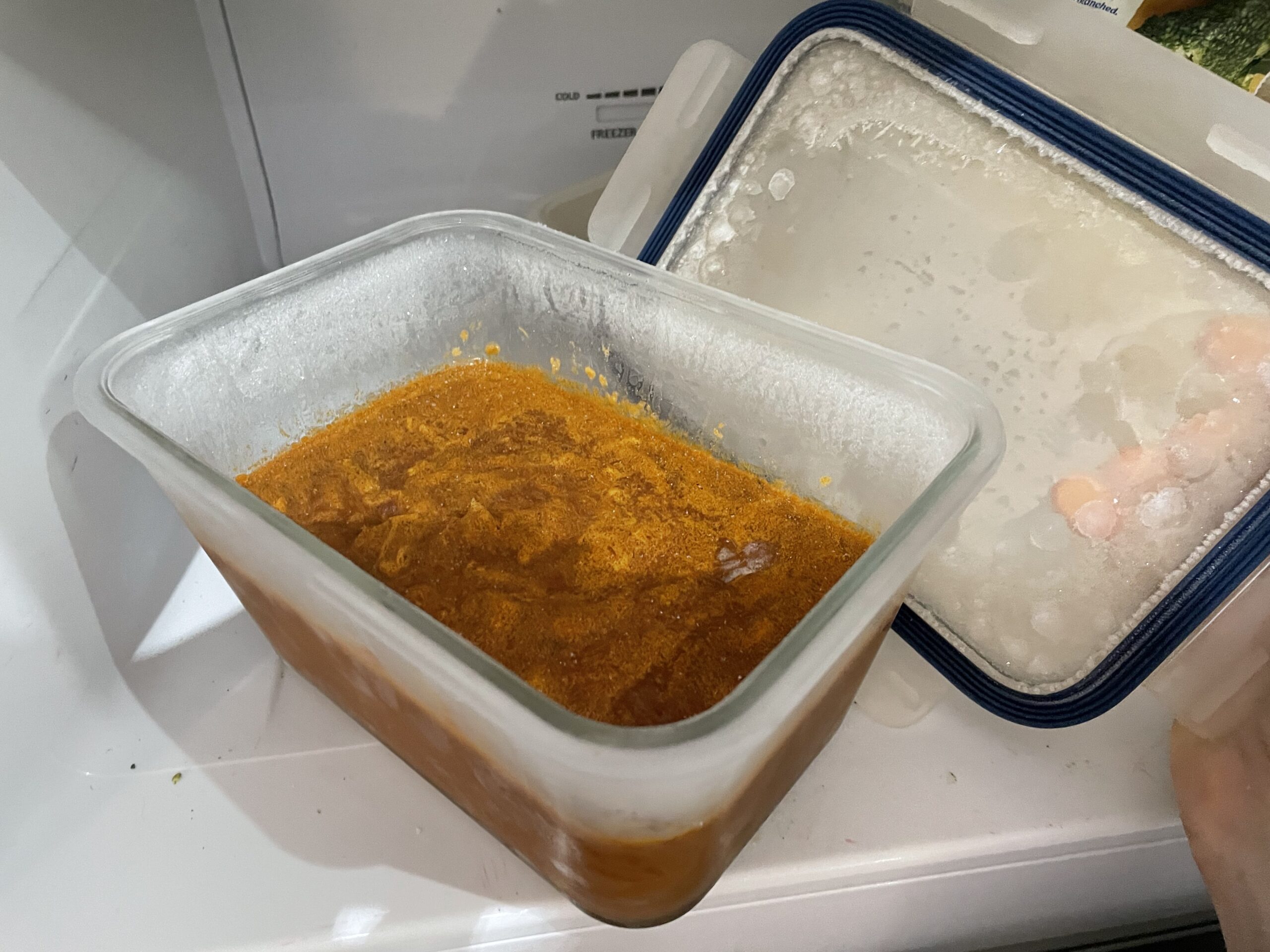
I tend to freeze in portions for 1 or 2 people, it actually tastes better the next day!
Borer
After removing the wall that separates the lounge from the kitchen, the structural engineer drew my attention to a piece of steel under the carpet “I didn’t put that there!” he asserted.
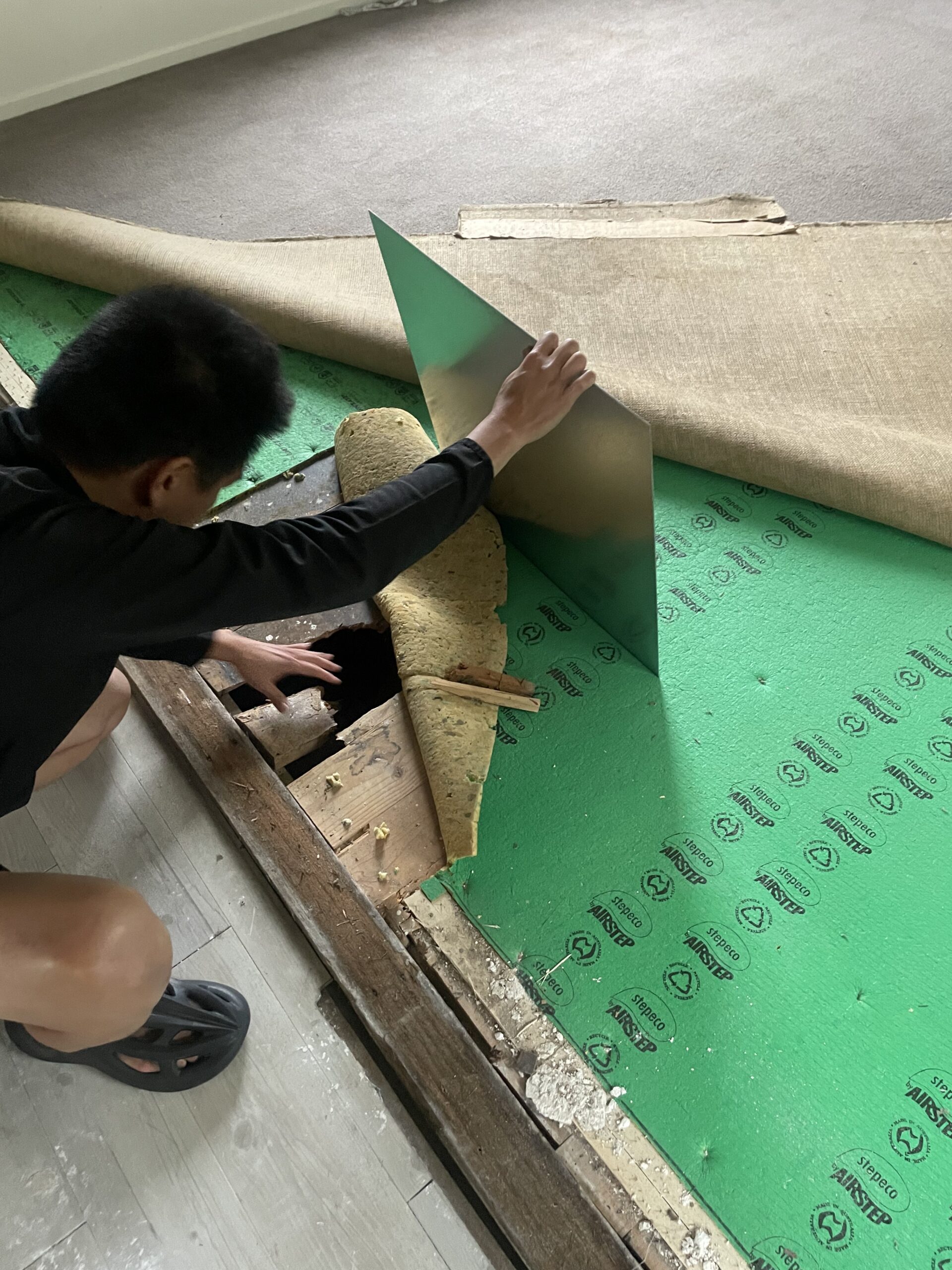
Now, we were already a little suspicious about the floor, once we started removing the plaster from the walls Tim accidentally put his knee through the floor at one point. Was that just an unlucky piece of wood or a more sinister systemic problem. Let’s find out together shall we?
We had an expert come in (from Bear Bottom inspections, tee hee) to inspect the floors and tell us what is going on. Turns out that the floorboards are riddled with borer.

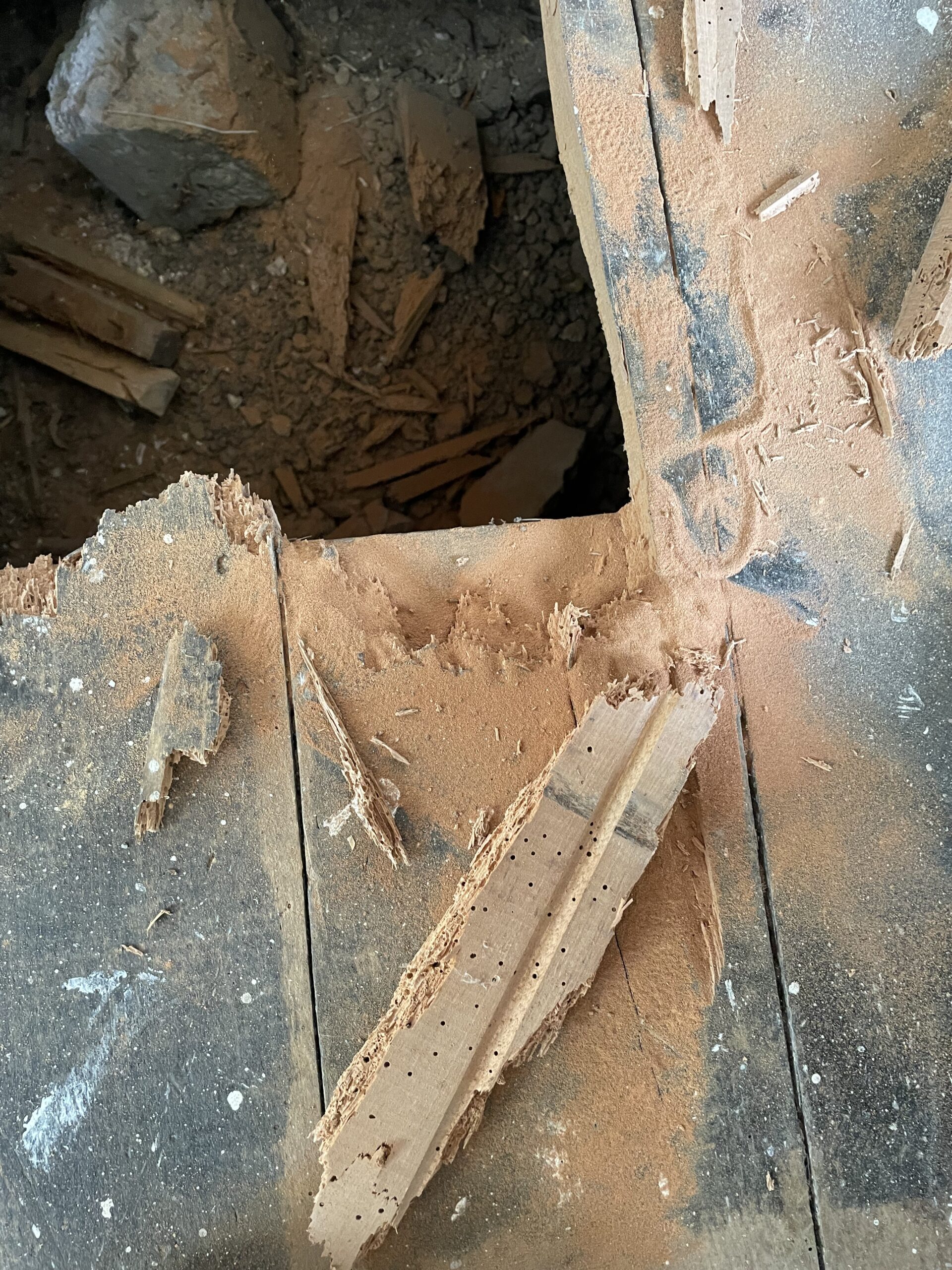
Apparently the borer beetles lay their eggs in the wood while it’s in the timber yard and then some time after it’s installed the larvae hatch and eat their way out of the wood. Pretty much all the floor boards are suspect. The good thing is that the insects themselves are long gone.
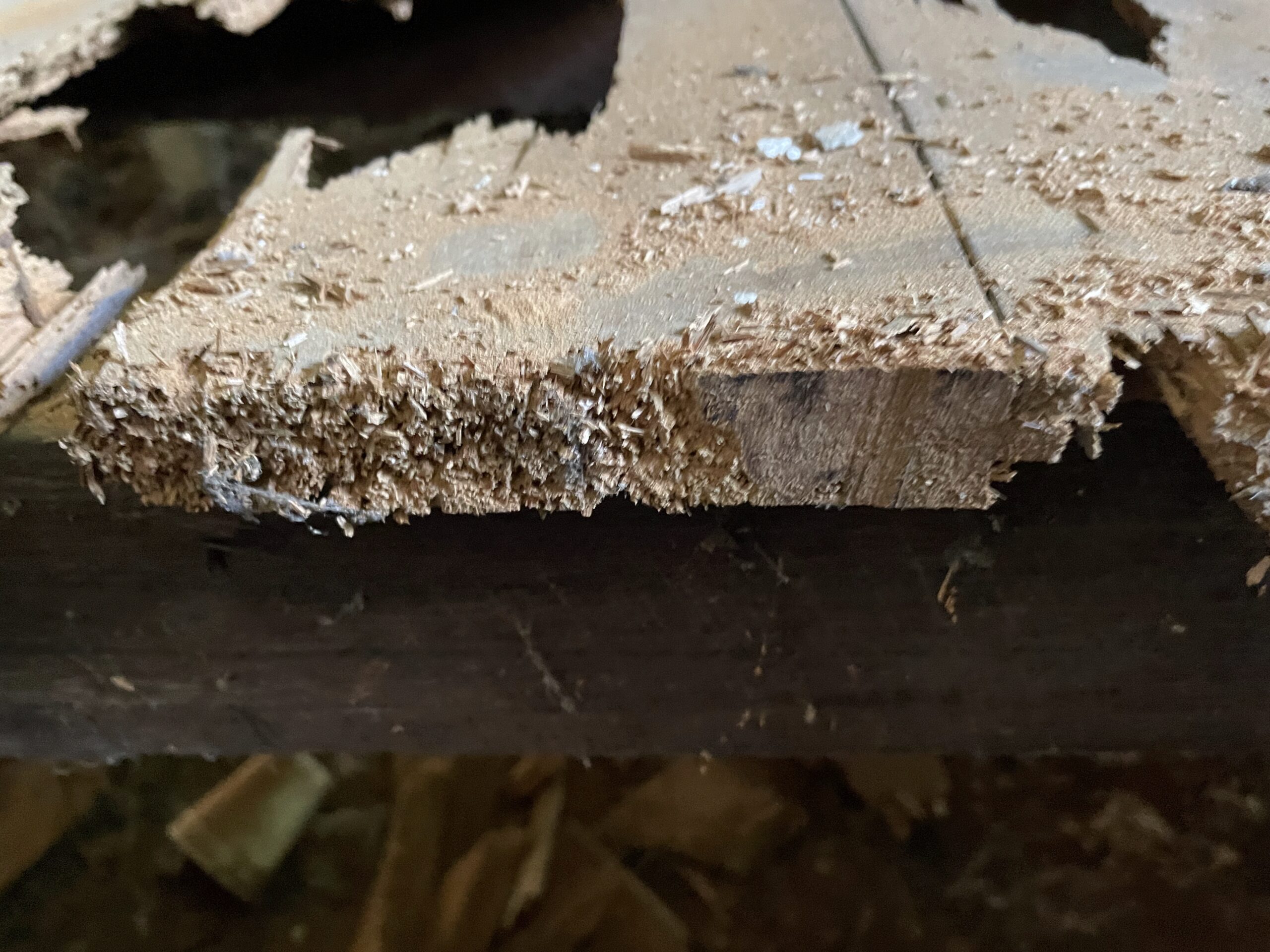
You can really see how much damage they do to the wood if you cut it, the image below shows a piece of flooring that has been cut, the bit that’s been eaten by borer (left) may as well be cardboard, you can see a little sliver of solid wood on the right hand side.
Am I a little annoyed at the previous owners from not selling anything? Yes, I am, but it’s an excuse to re-do the floors properly with more modern flooring, so I am not too upset.
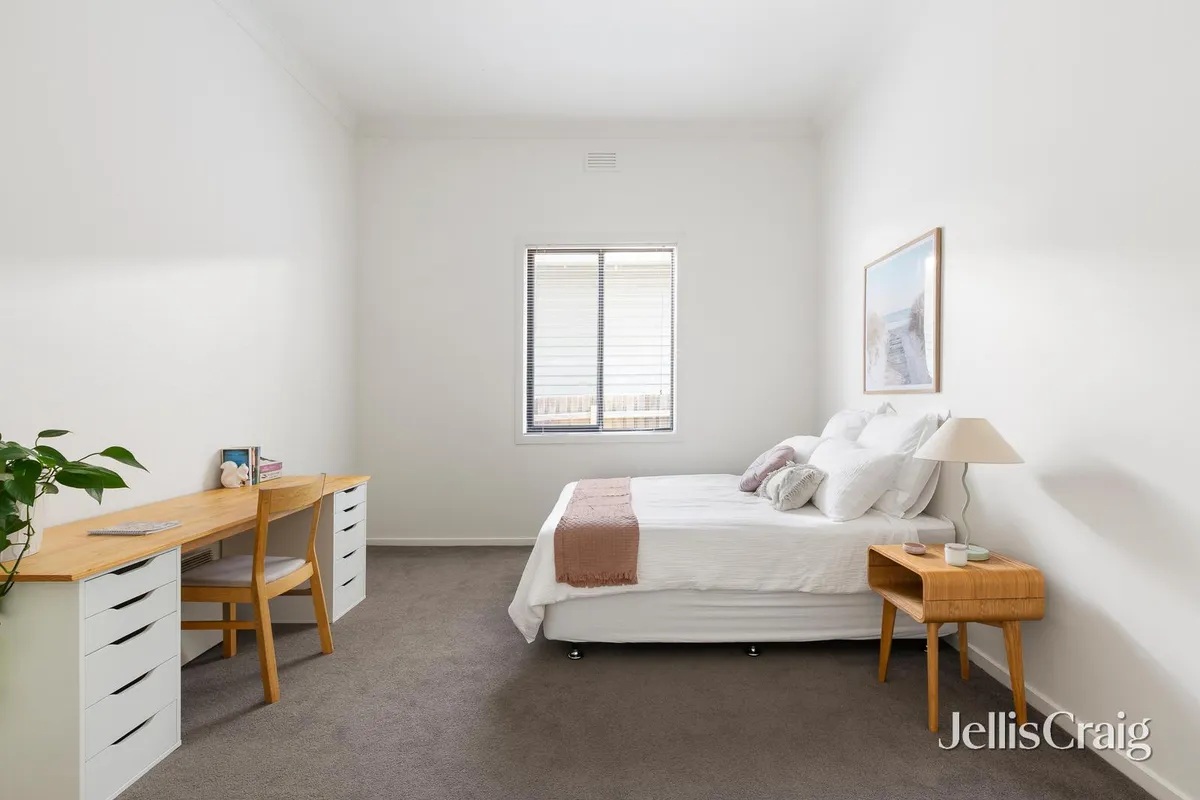
See below for the progressive discovery of borer in the bedroom as well, from the glossy sales photo through to bare floor through to uh oh.
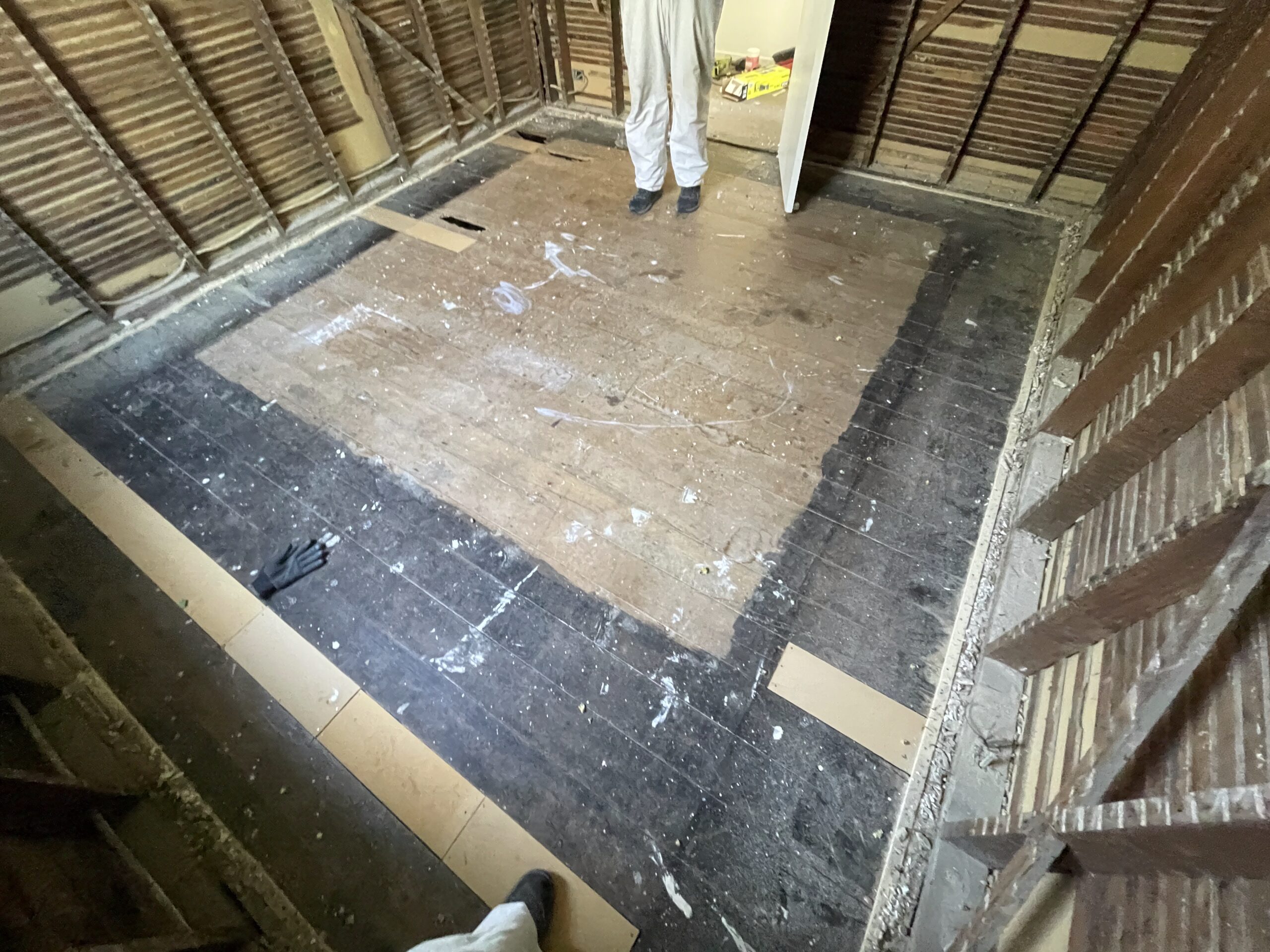

Note that some floor boards are painted black? Apparently back in the olden days you would have a rug in the centre of the room and then paint the bit around the outside of the rug.
Open Plan
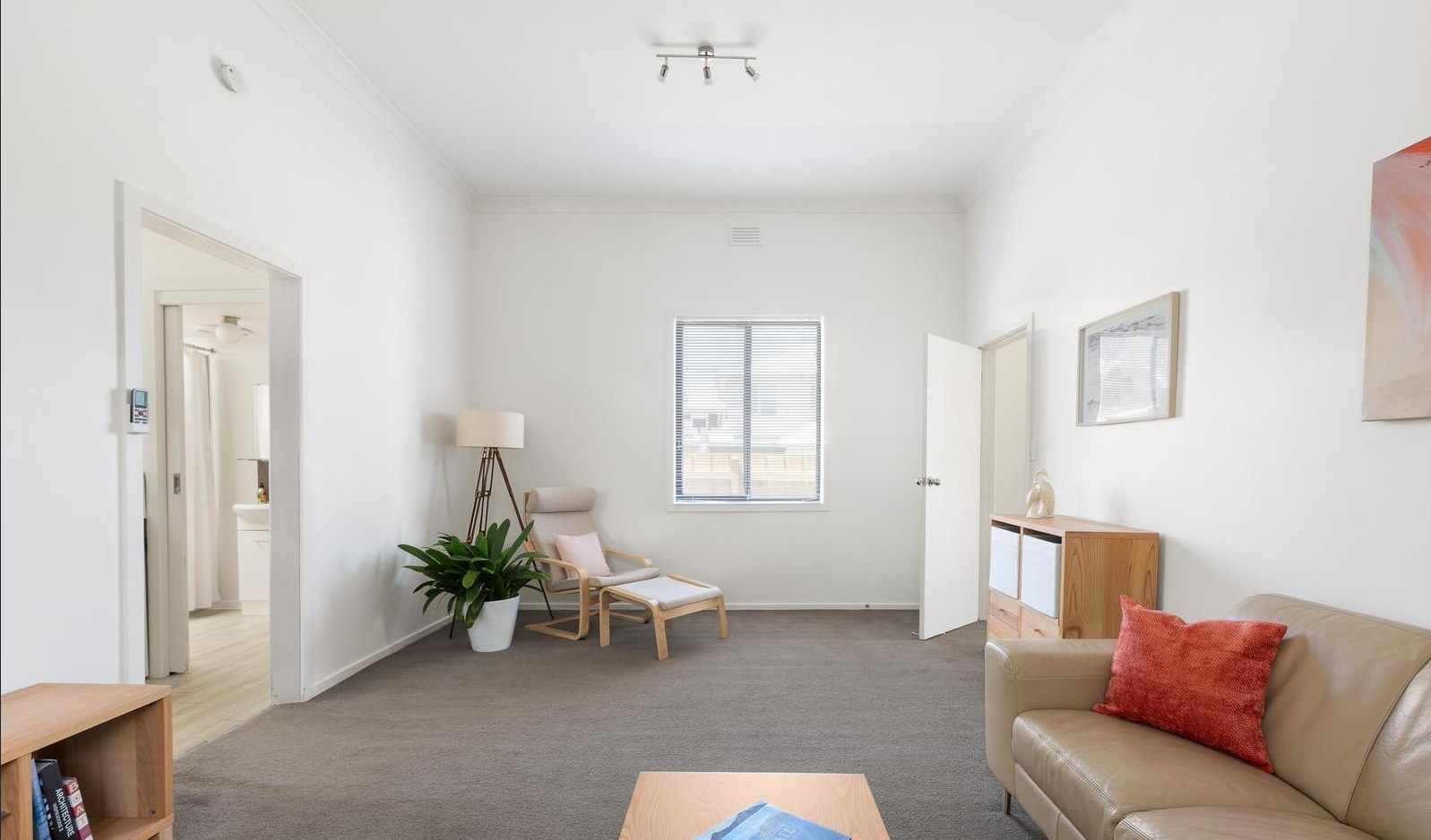
This is the big ticket item. When we first inspected the house, I knew I didn’t like the wall between the kitchen and the lounge. Not only because this is not a very modern approach to house layouts, but also because it means you have an awkward toilet access next to the stove in the kitchen.
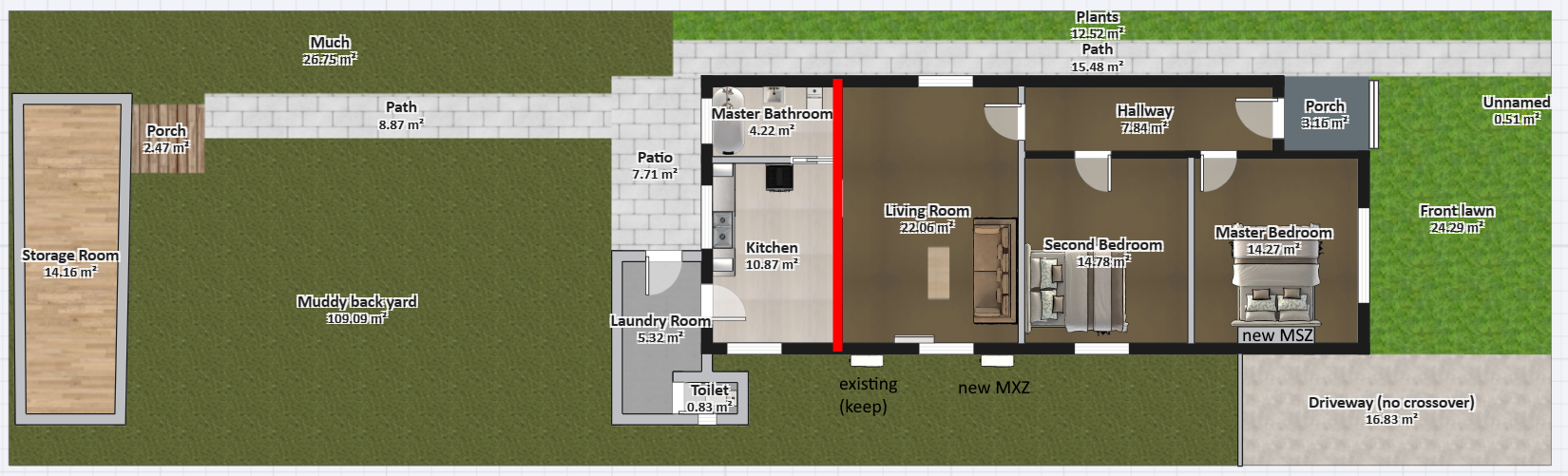
From a floor plan perspective, we just wanted to get rid of the wall entirely, maybe move the bathroom somewhere else in time, but regardless of the long term plan, that wall in red has to go.
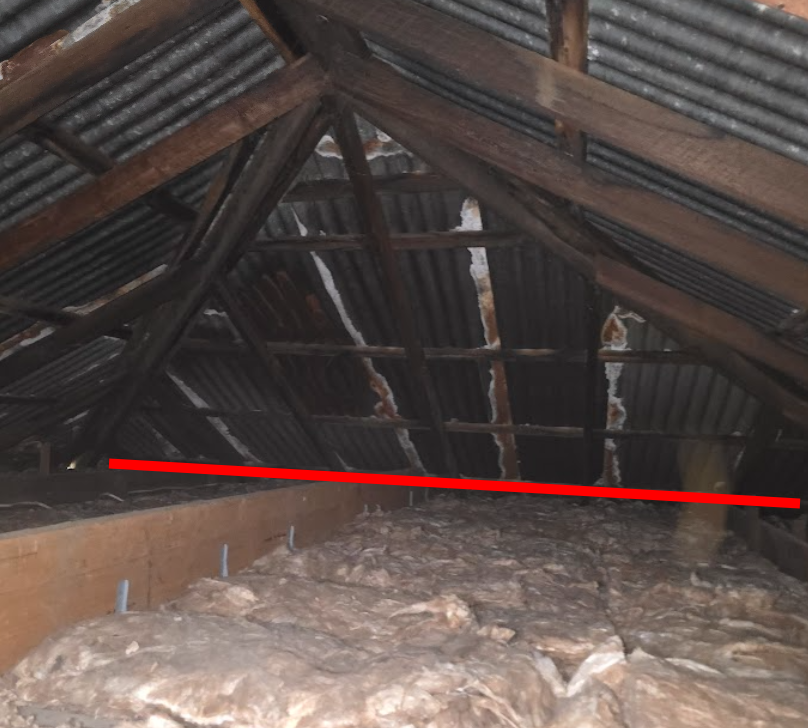
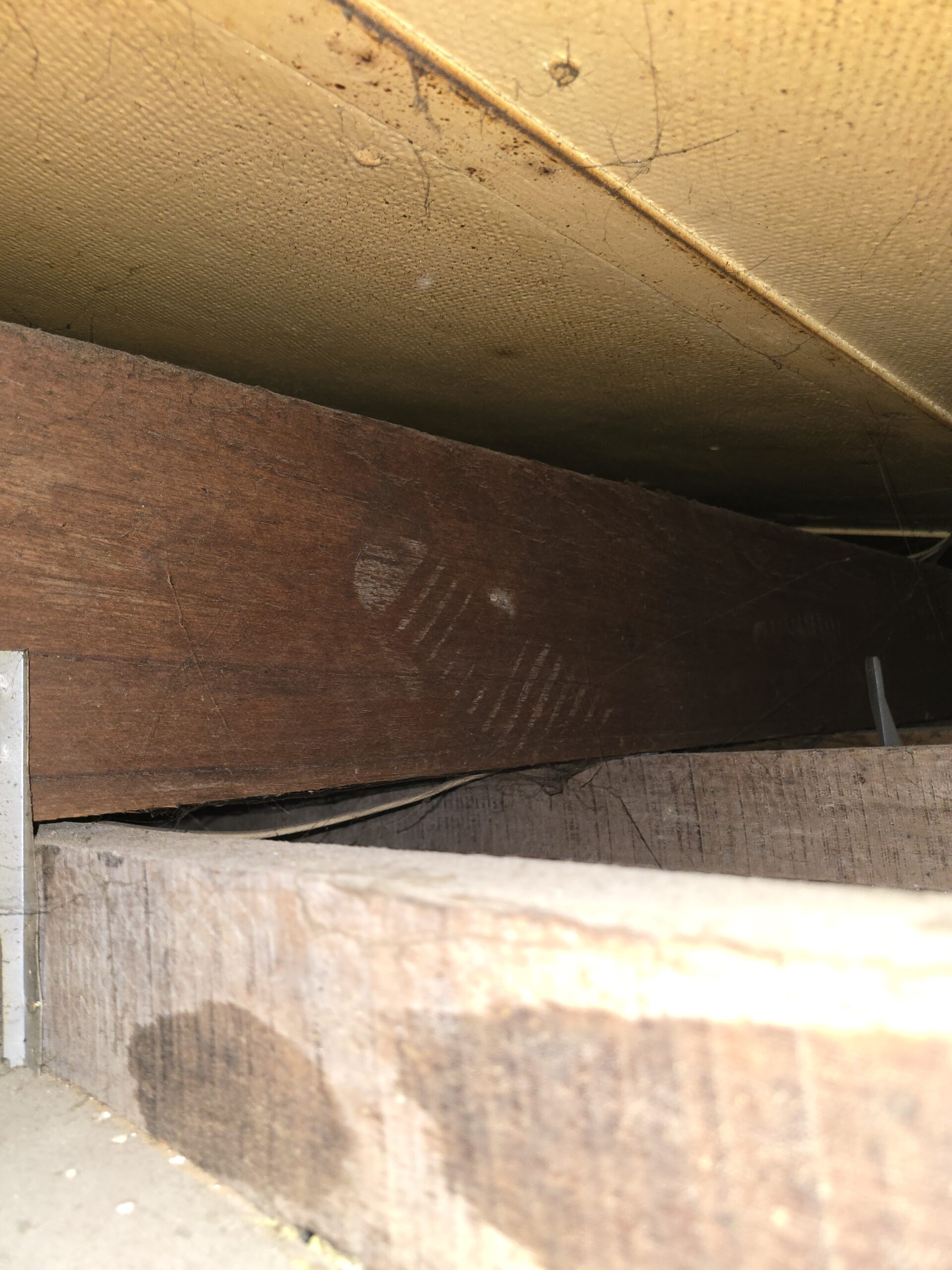
We weren’t sure, but looking in the roof cavity, it kind of felt like that wall was structural. See that wooden beam on the left of the image, that’s holding up the ceiling in the lounge, and it’s resting on the kitchen wall.
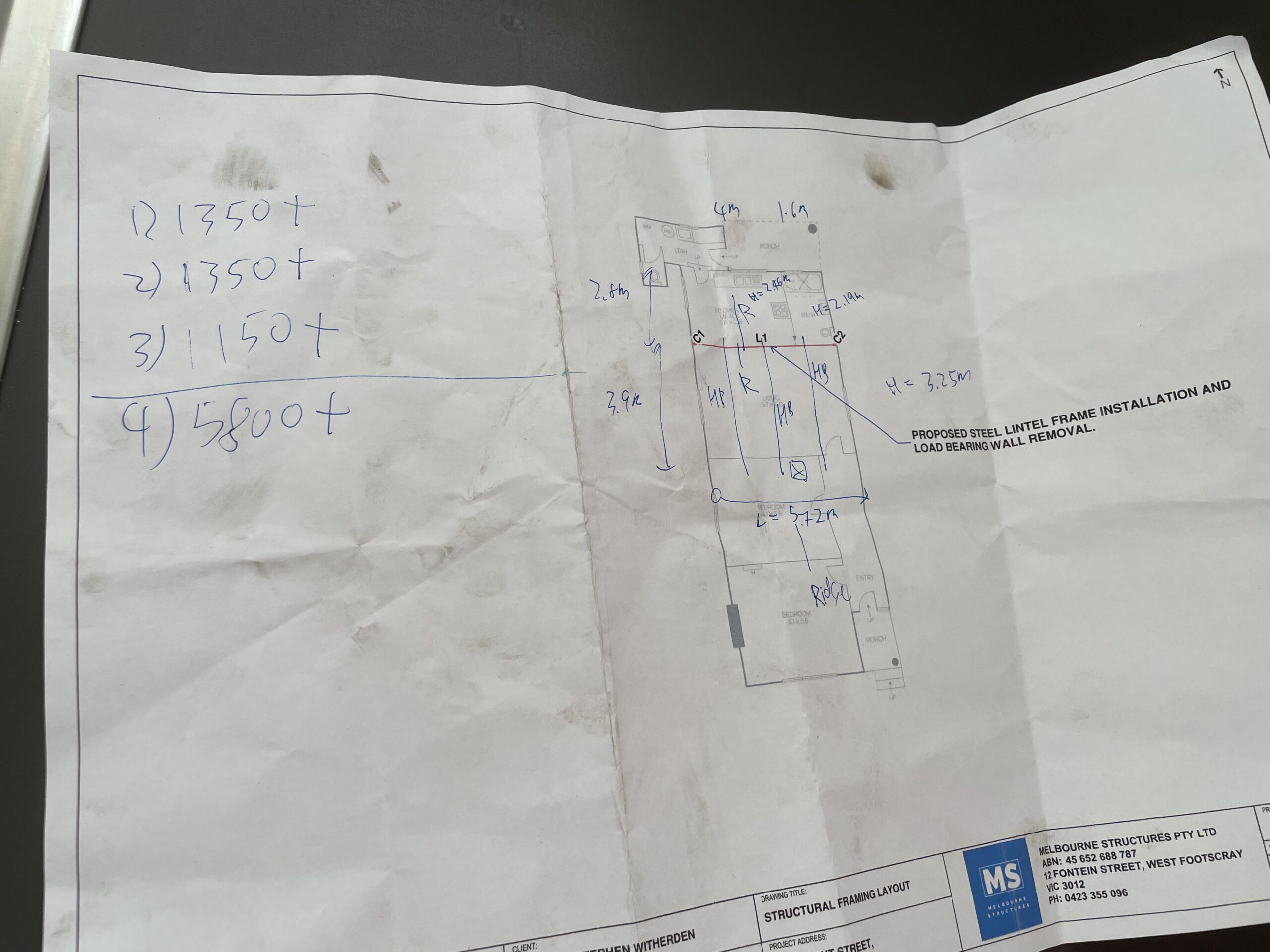
This was soon confirmed by a structural engineer who agreed it was structural. He quotes us about $10k all up to remove the wall. About $5k for the design and permitting, and then $5k in a single day to put the steel in. I agreed!
The catch was we had to remove all the plaster, and get rid of the asbestos in the kitchen ceiling. Oh, did I forget to mention that? Yeah, we discovered asbestos in the kitchen ceiling. Goodie.
This kind of asbestos is generally safe if you don’t disturb it and in Australia you can remove 10 square metres by yourself, but we were definitely keen to get professionals in instead. The professionals removed the ceiling and asbestos and that left us with what I thought was a much nicer looking kitchen already!
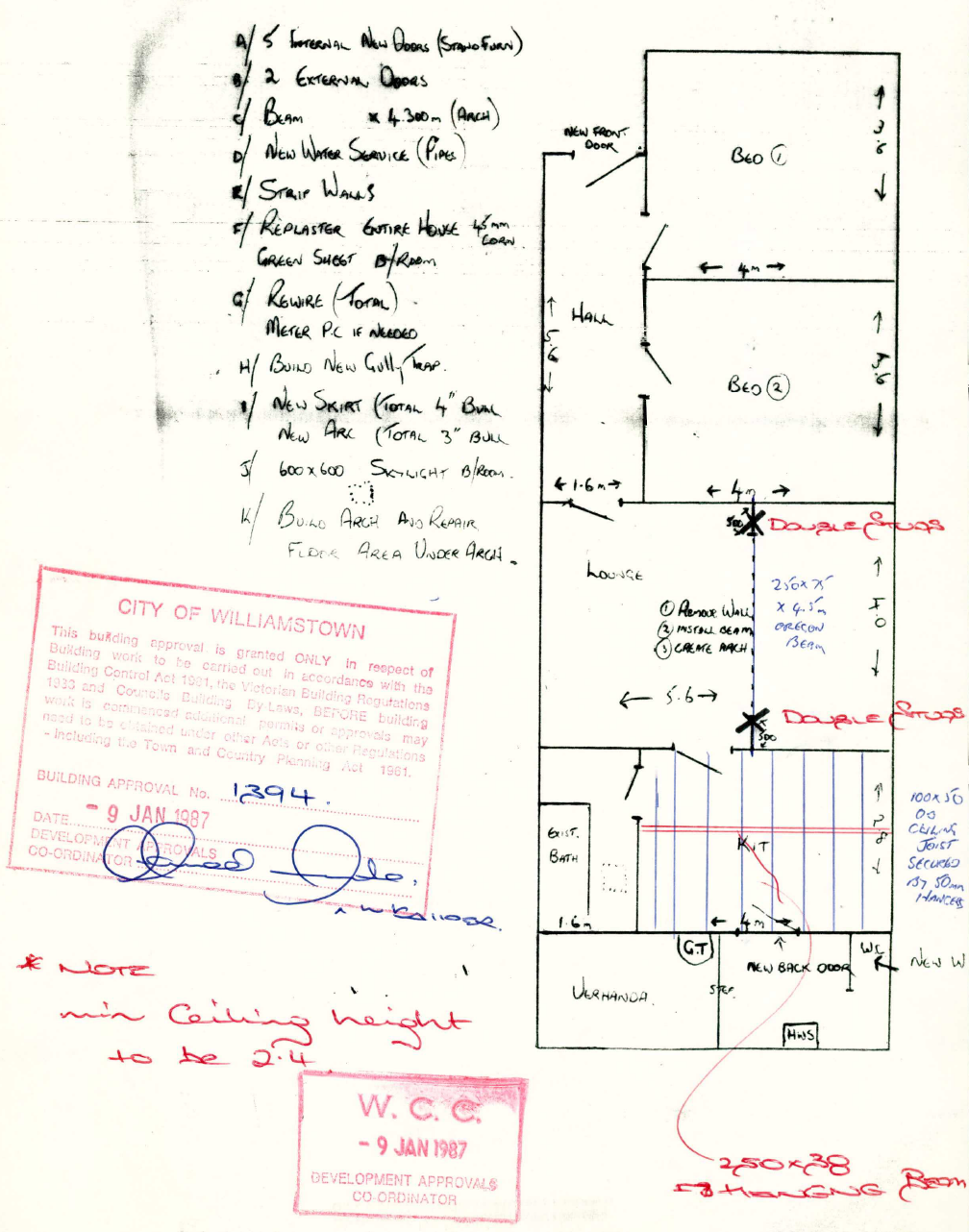
The eagle eyed amongst you will notice some weird thin strips of wood on the walls behind the plaster board. When we spoke to the structural engineer, he said he wouldn’t be surprised if the kitchen had been an add-on, and certainly when we paid the council for plans from 1987, it certainly looked like the kitchen has been created as an add-on just then.
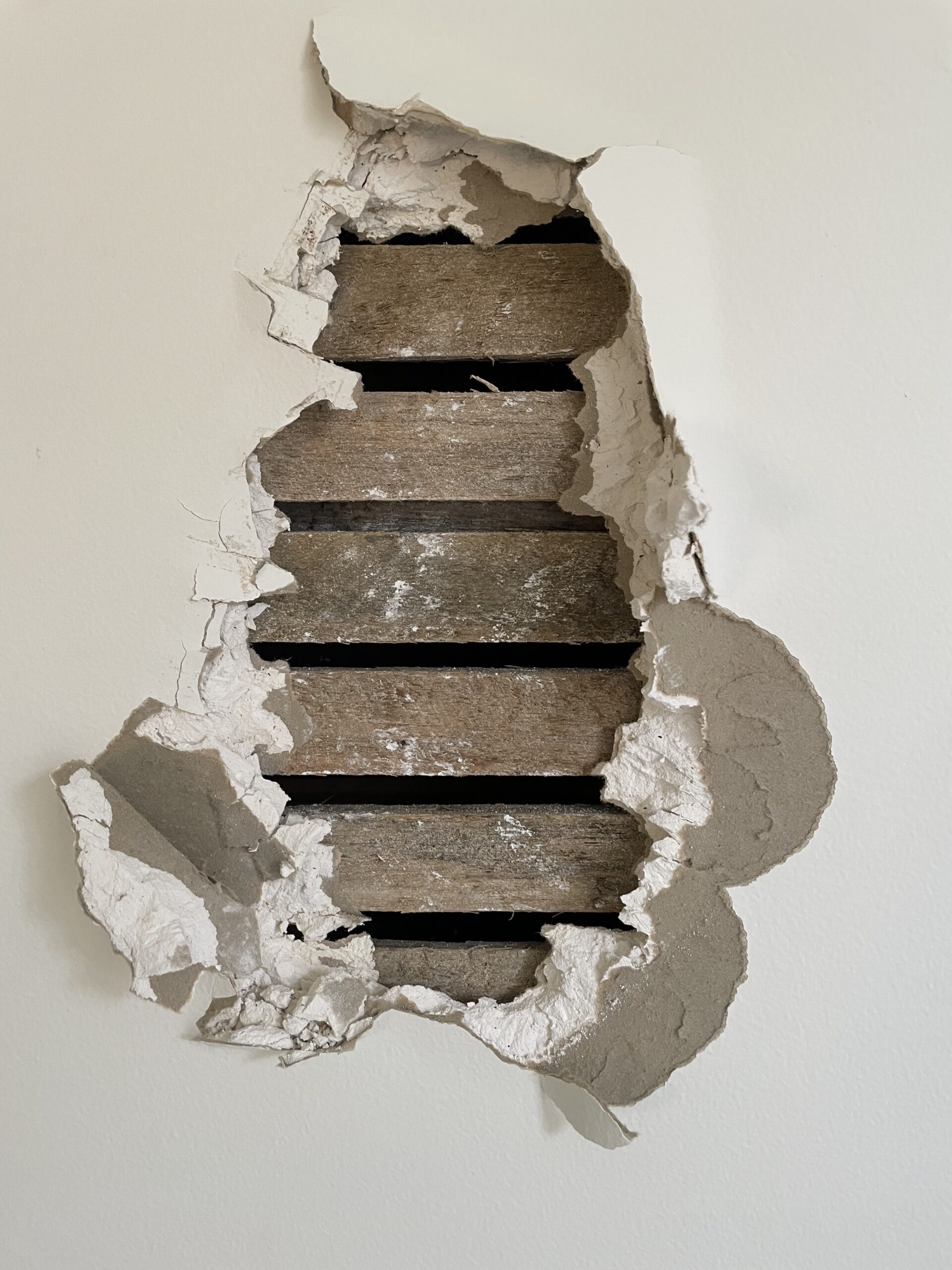
So we kind of expected to see weatherboard when we broke into the plaster for the first time. But this is not weatherboard, this is lathe.
What they would do is put these thin strips of wood down and then plaster over them. Of course nowadays we use gyprock board, and it looks like the previous owners hadn’t bothered to remove the lathe, they had removed the plaster and just left the lathe in place.
Well, all that plaster had to go.
So we started demolishing
And demolishing
And demolishing
And demolishing
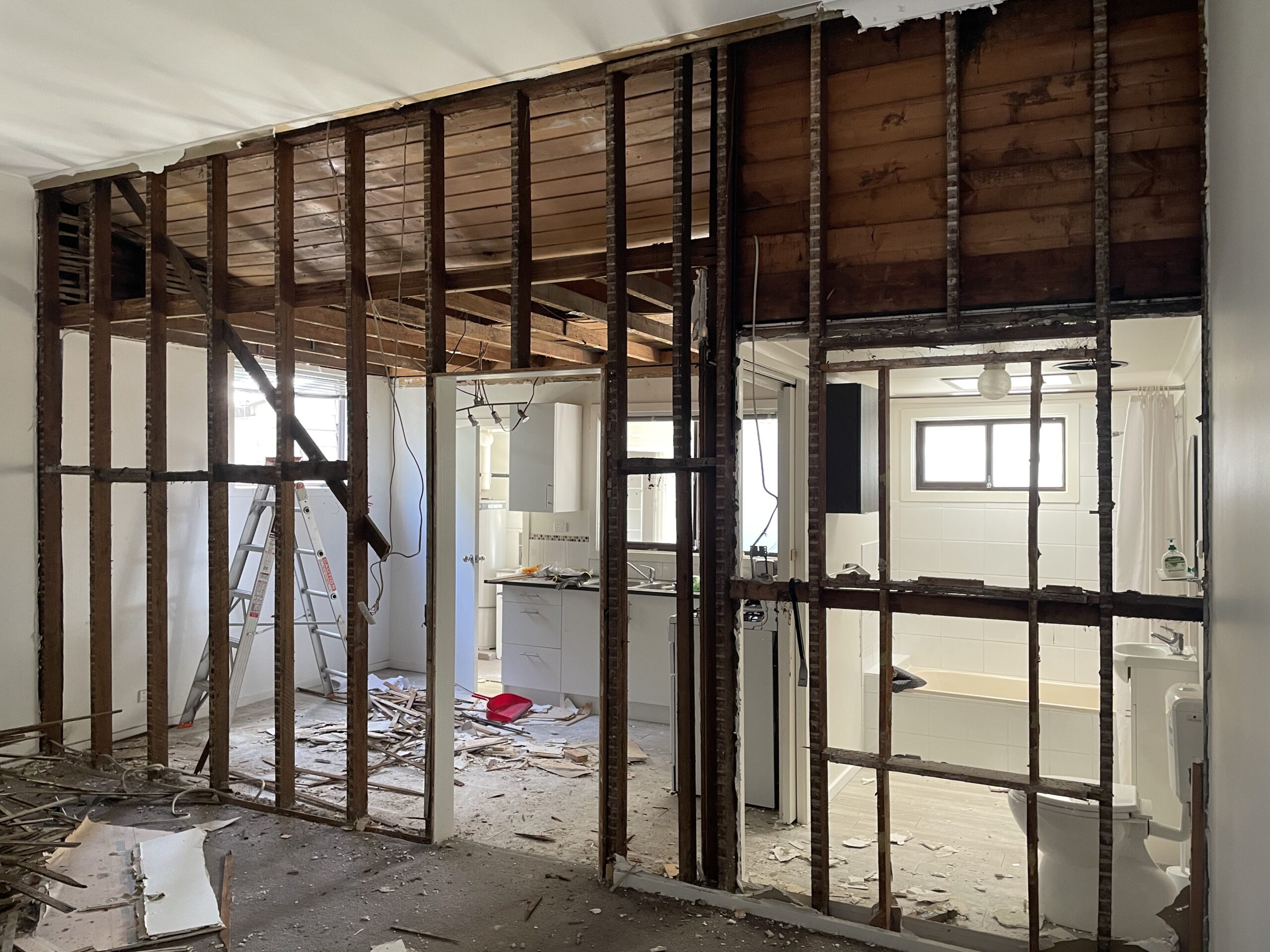
Notice that on the top right there? Yes, that’s weatherboard! Proving effectively that at least the bathroom used to be the outside of the house. Also notice that dodgy looking door cavity? I reckon that was once the original back door!
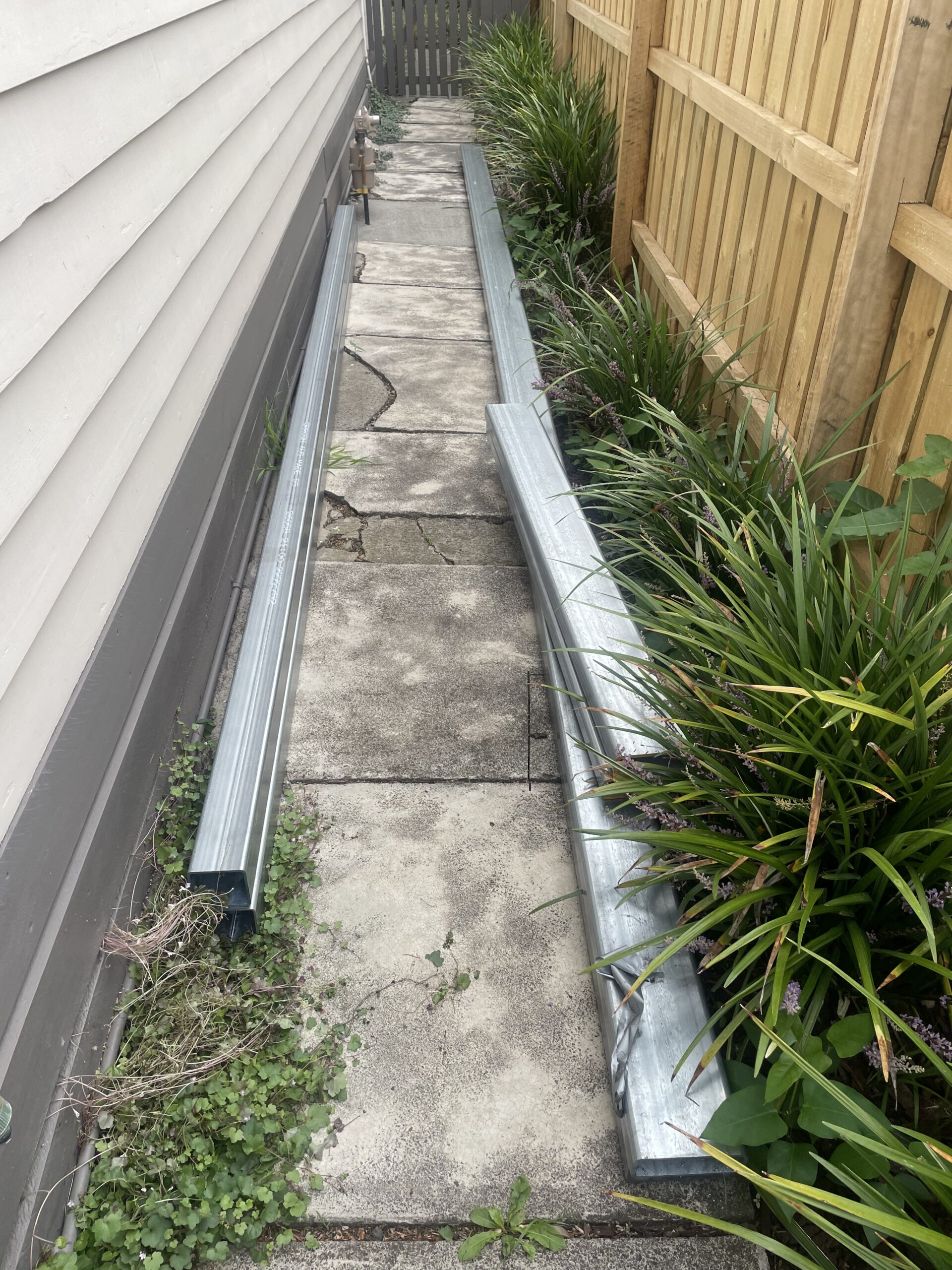
The fun part out of the way it was time to let the professionals in to do their magic. The steel arrived pretty quickly and we had to arrange an electrician to remove all the power from the wall.
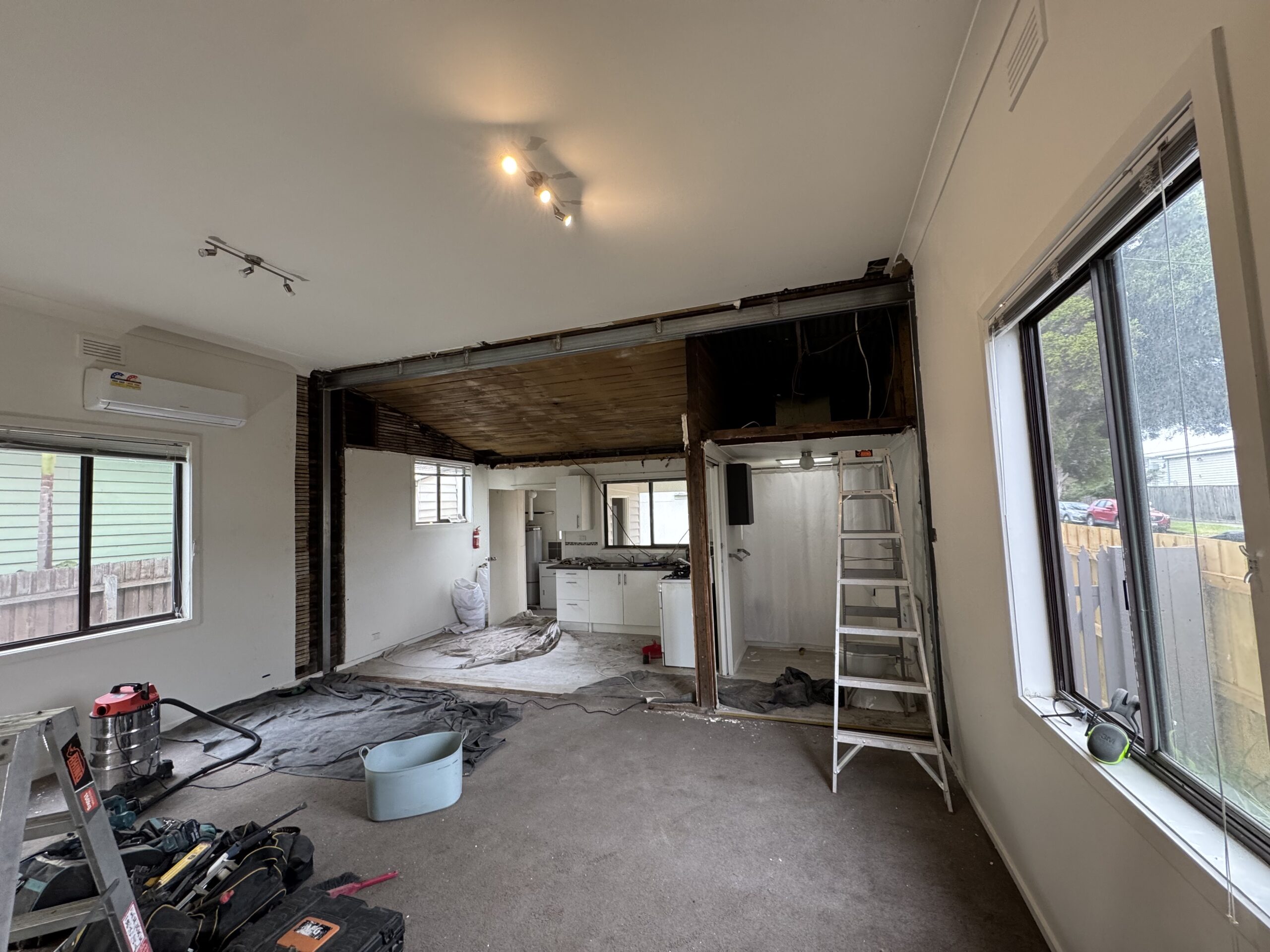
Please enjoy this video of the professionals at work.
And I have to say, I really like this so much more already.
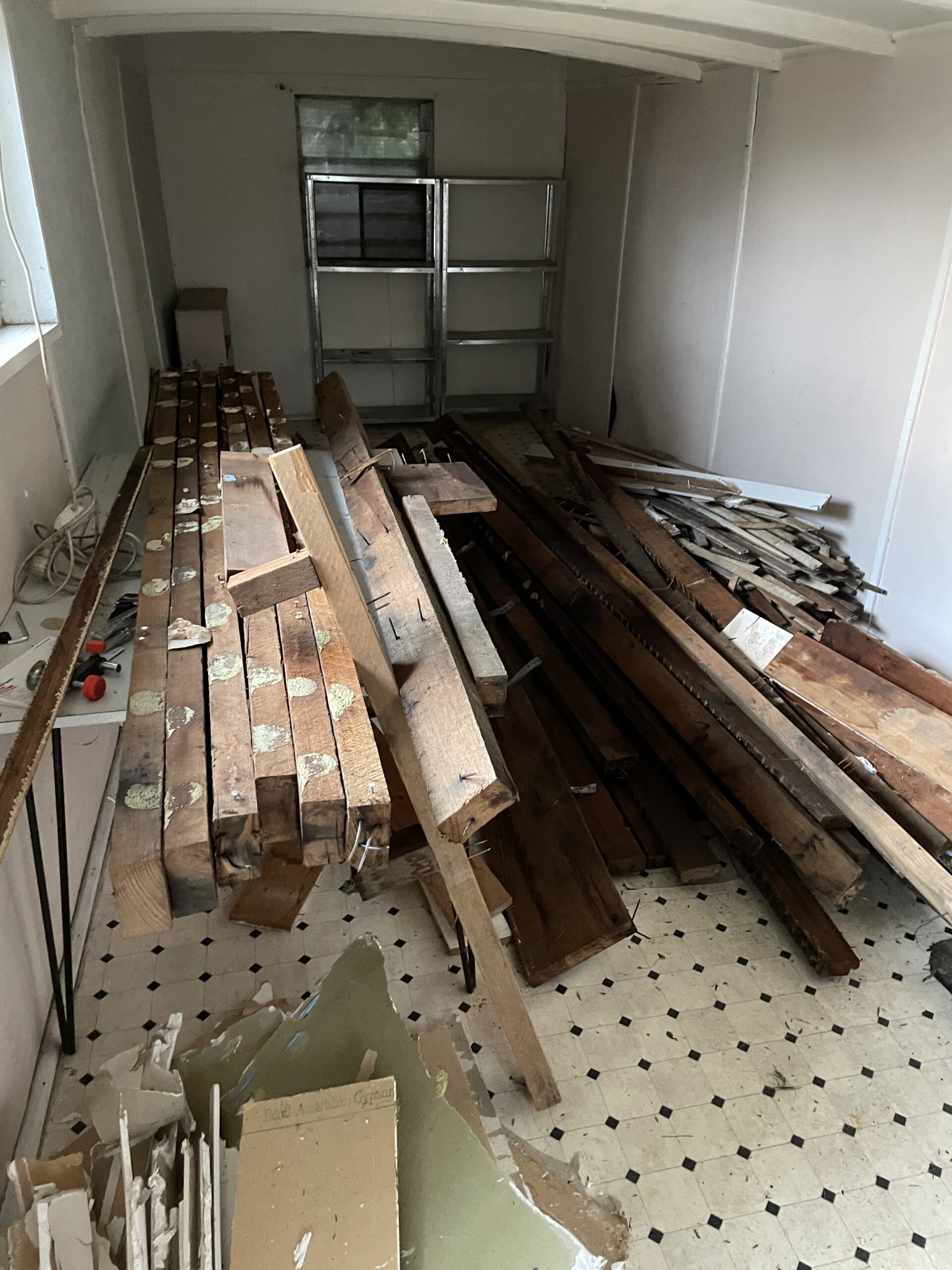
We also now have a stockpile of beautiful old wood to do… something with.
Subfloor access
The subfloor is the part of the house under the house. In older wood constructions, the idea is to have airflow under the house to keep the timber dry and free from nasty things like fungus and rot.
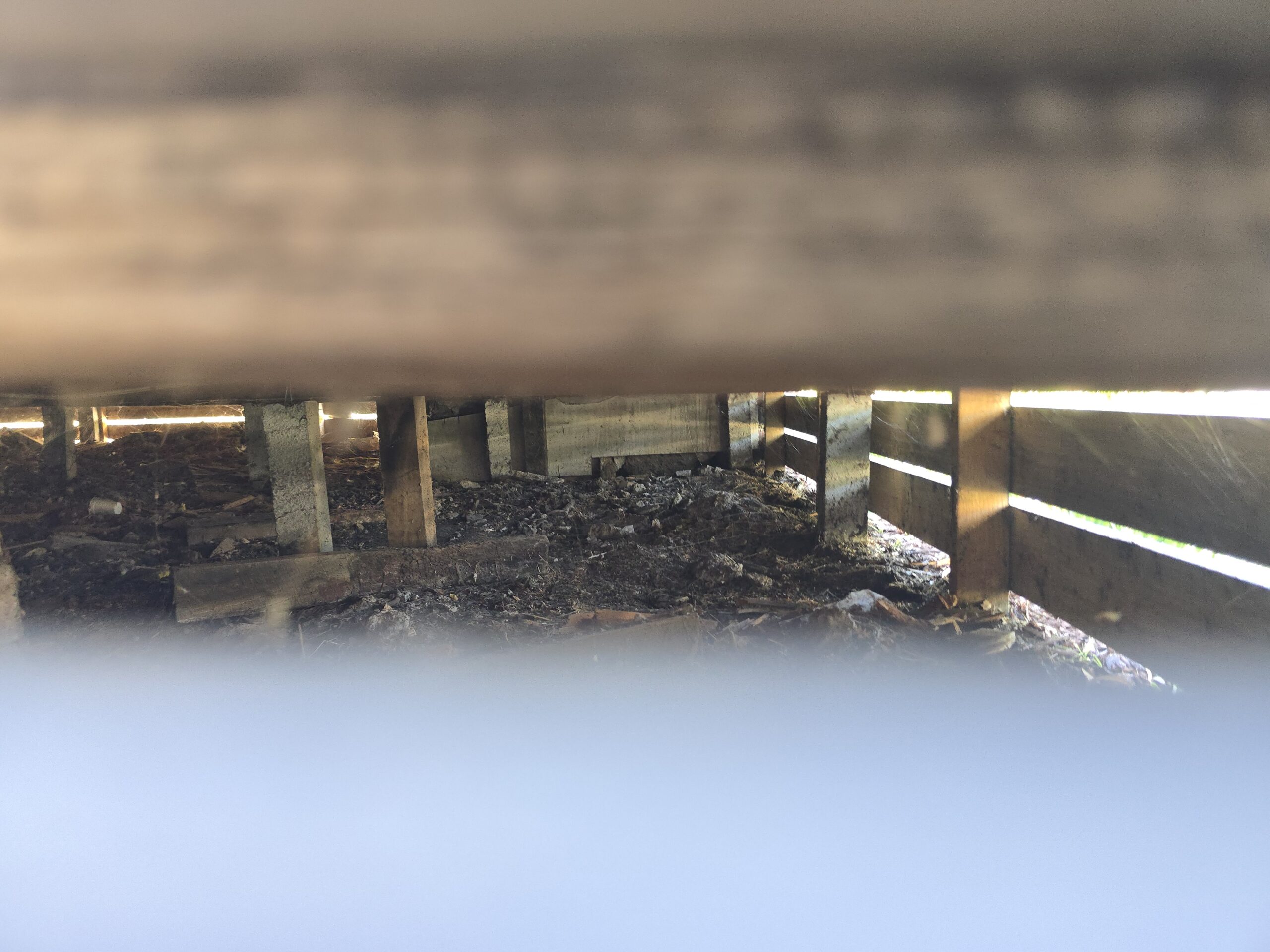
This means the houses are raised up on timber or concrete “stumps”. This seems to have worked fine for my house for the last 100 years or so, but over time the “stumps” can become damaged or out of alignment.
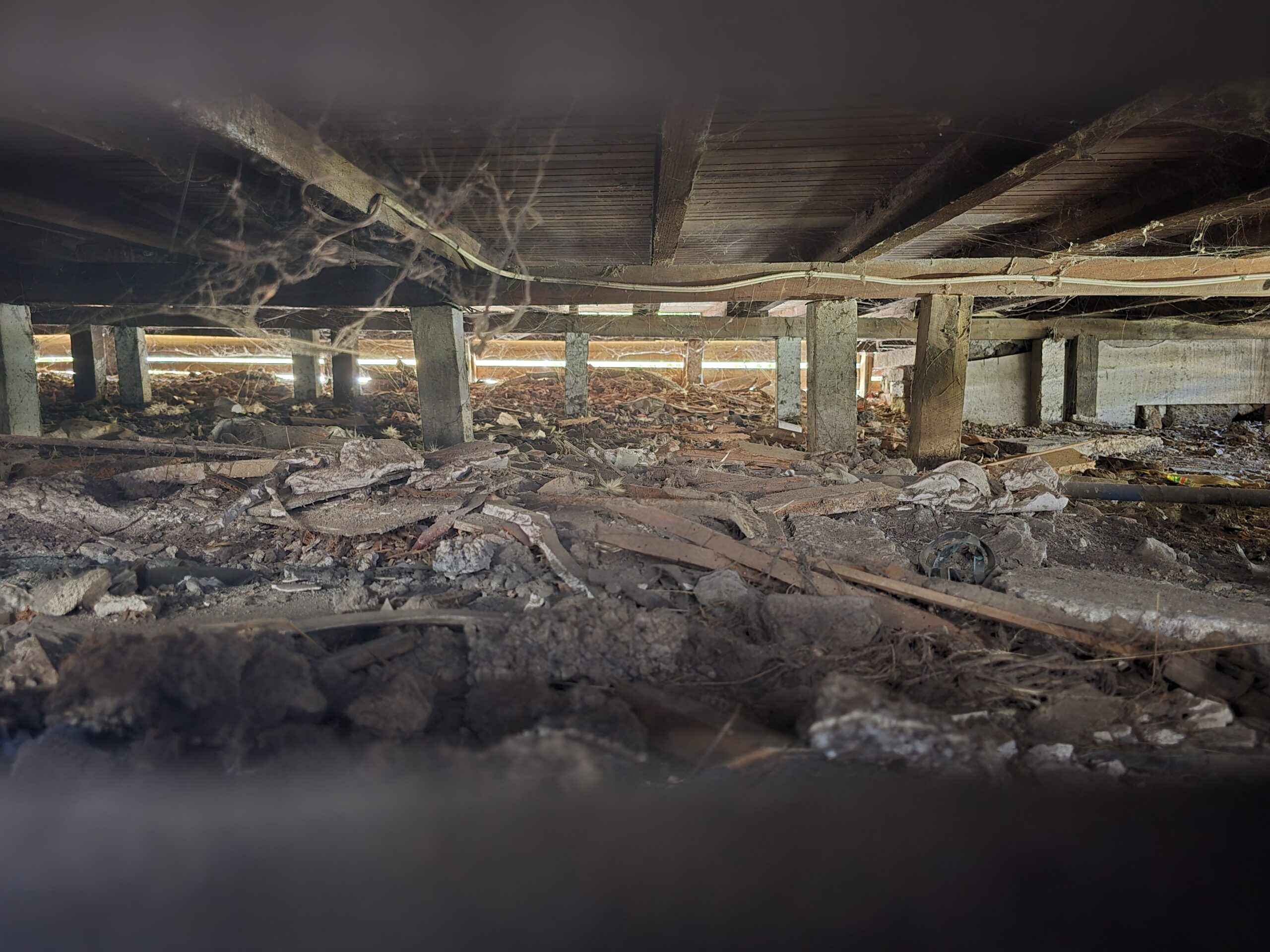
Typically this is why you need “sub floor access” to get in under the house to check on the stumps or do things like fix plumbing or other such things. Think of it like a roof cavity under your feet. You can see in the images above that the house has already been “re-stumped” once before and they left the original wooden stumps in place alongside the newer concrete ones.
Turns out that there’s no subfloor access at the moment, so I had to create one. After much anguish, I decided I had to do it here near the front of the house because that’s where the biggest gap was (still only 400mm height to squeeze through).
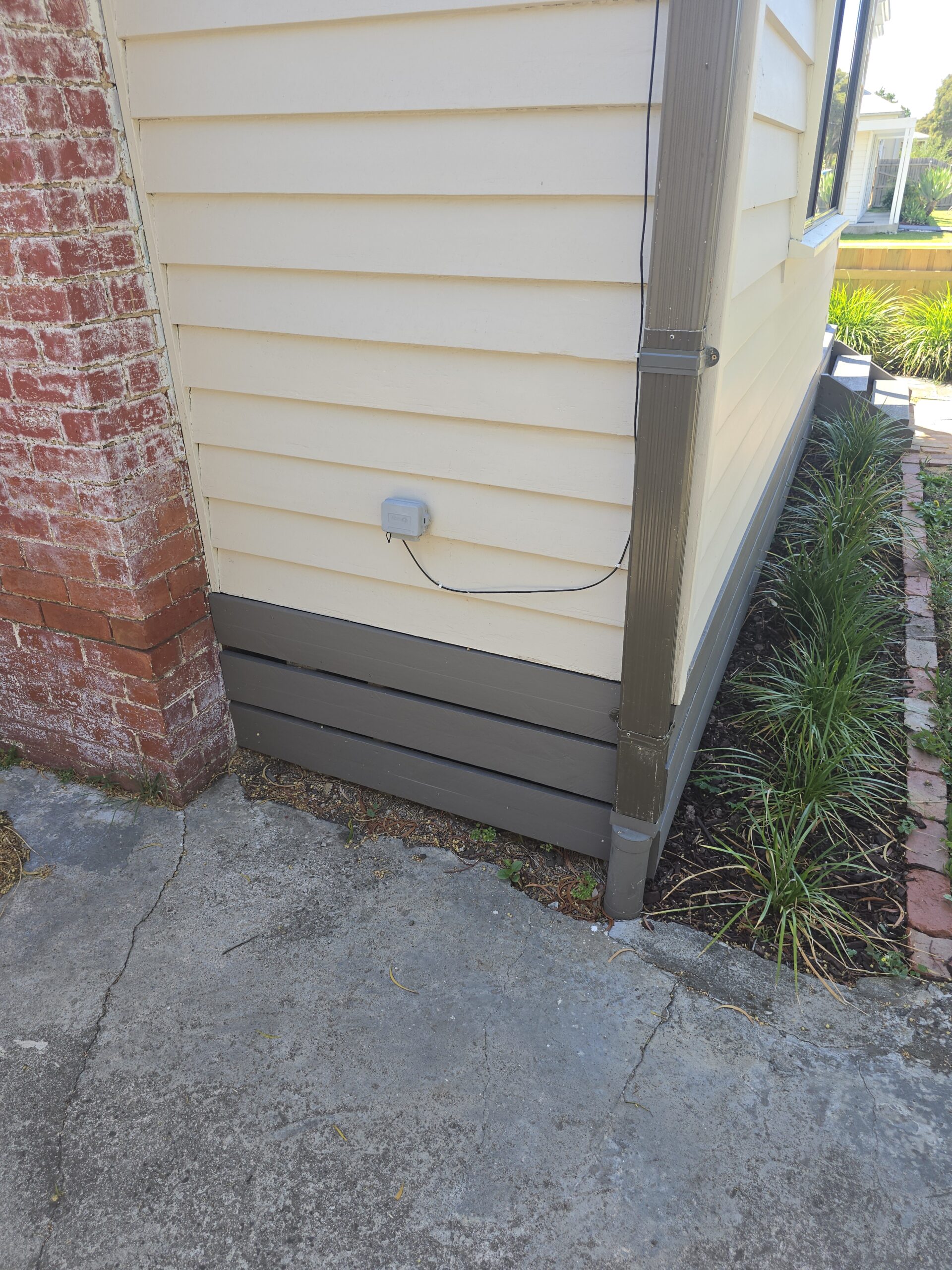
My plan was to create a hinged access panel that swings “up” allowing me to crawl in underneath. I would need to find a way to make it invisible from the front, especially since the council don’t want any changes to the appearance of the heritage character of the house.
I got council to weigh in anyway, the council guy was very supportive “well, you will need subfloor access to do the restumping”.
The next challenge was getting these dan screws out. They were rusted in and I didn’t want to use a power tool and strip them. many trips to bunnings resulted in this innovation.
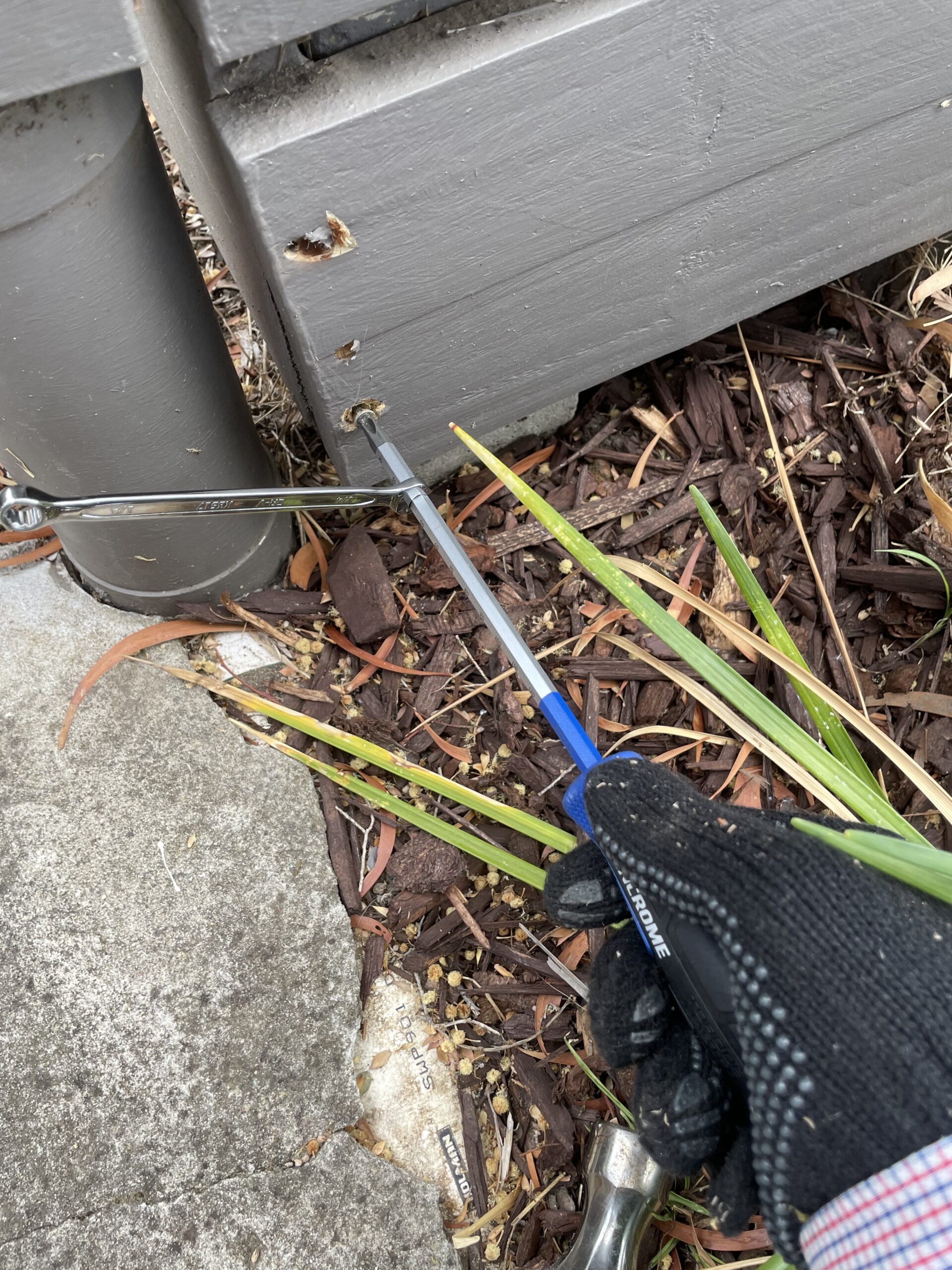
Ah, now it’s finally starting to take shape.
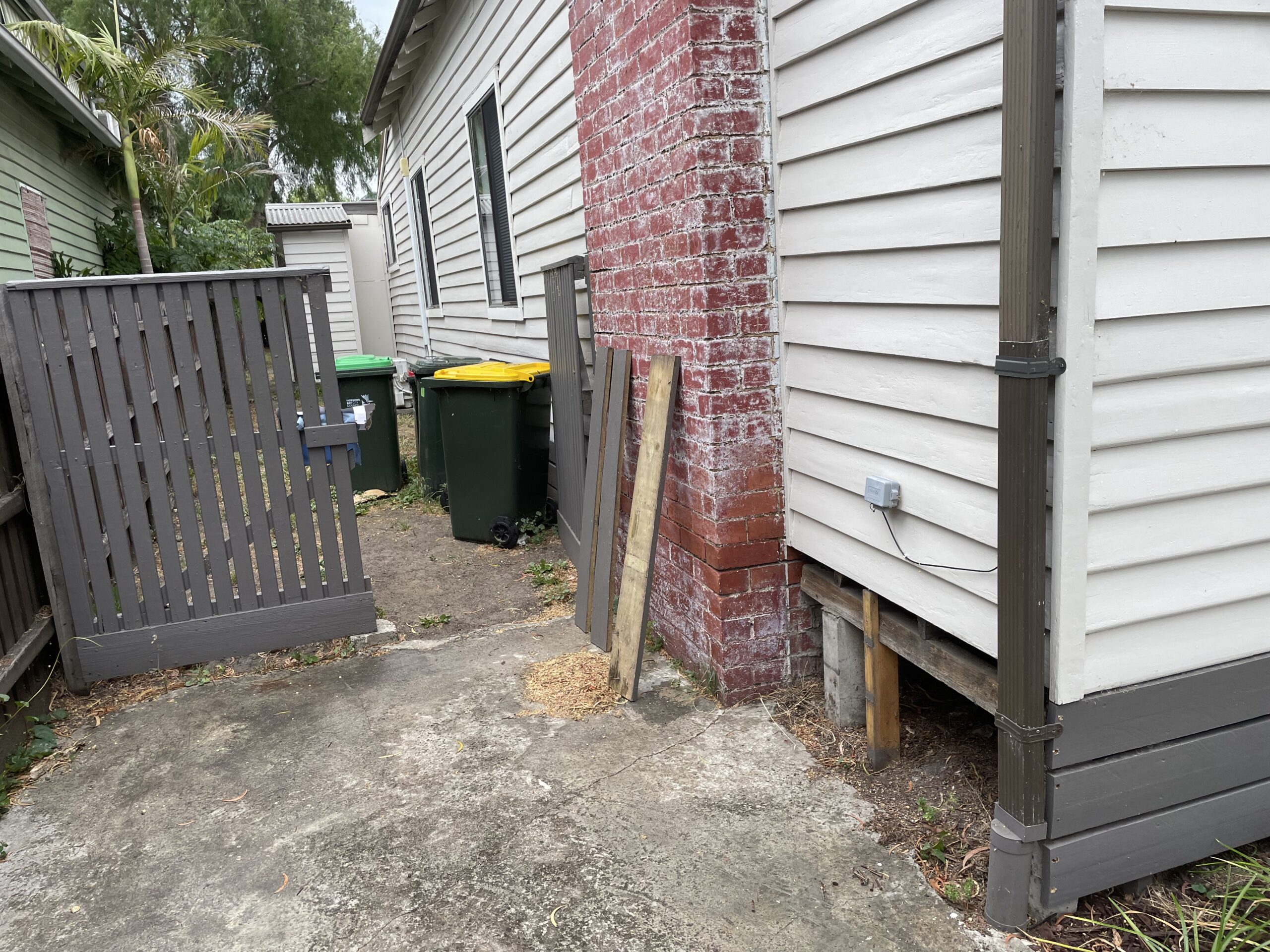
I would need to cut the wood of course, so that I could screw the right hand side to the front of the house. I decided a mitre cut would hide the cut best, but since I was doing this before we bought the mitre saw, it was very hard going.
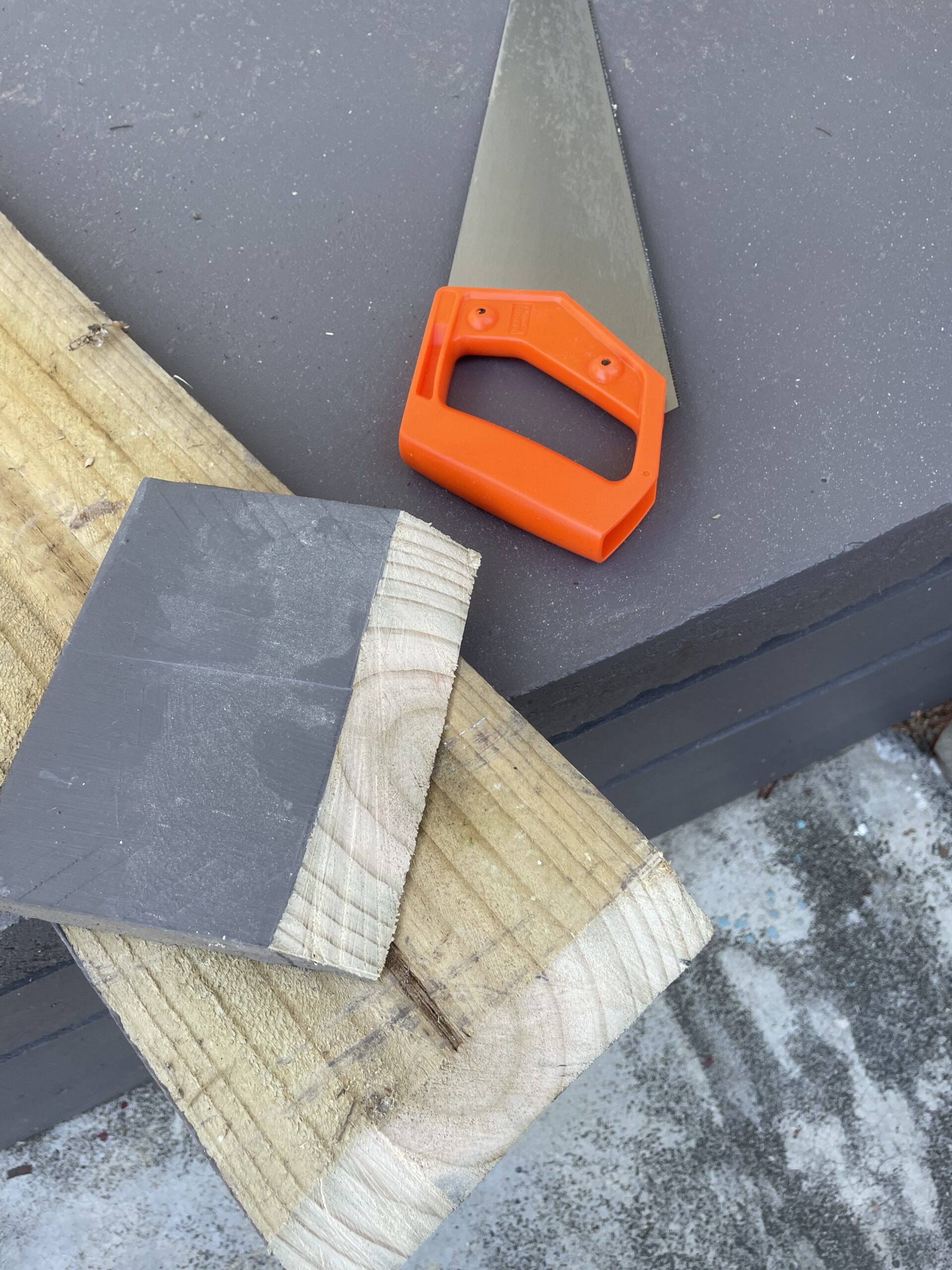
You know how they same measure twice cut once. Well, have they ever heard about measuring incessantly for days on end?
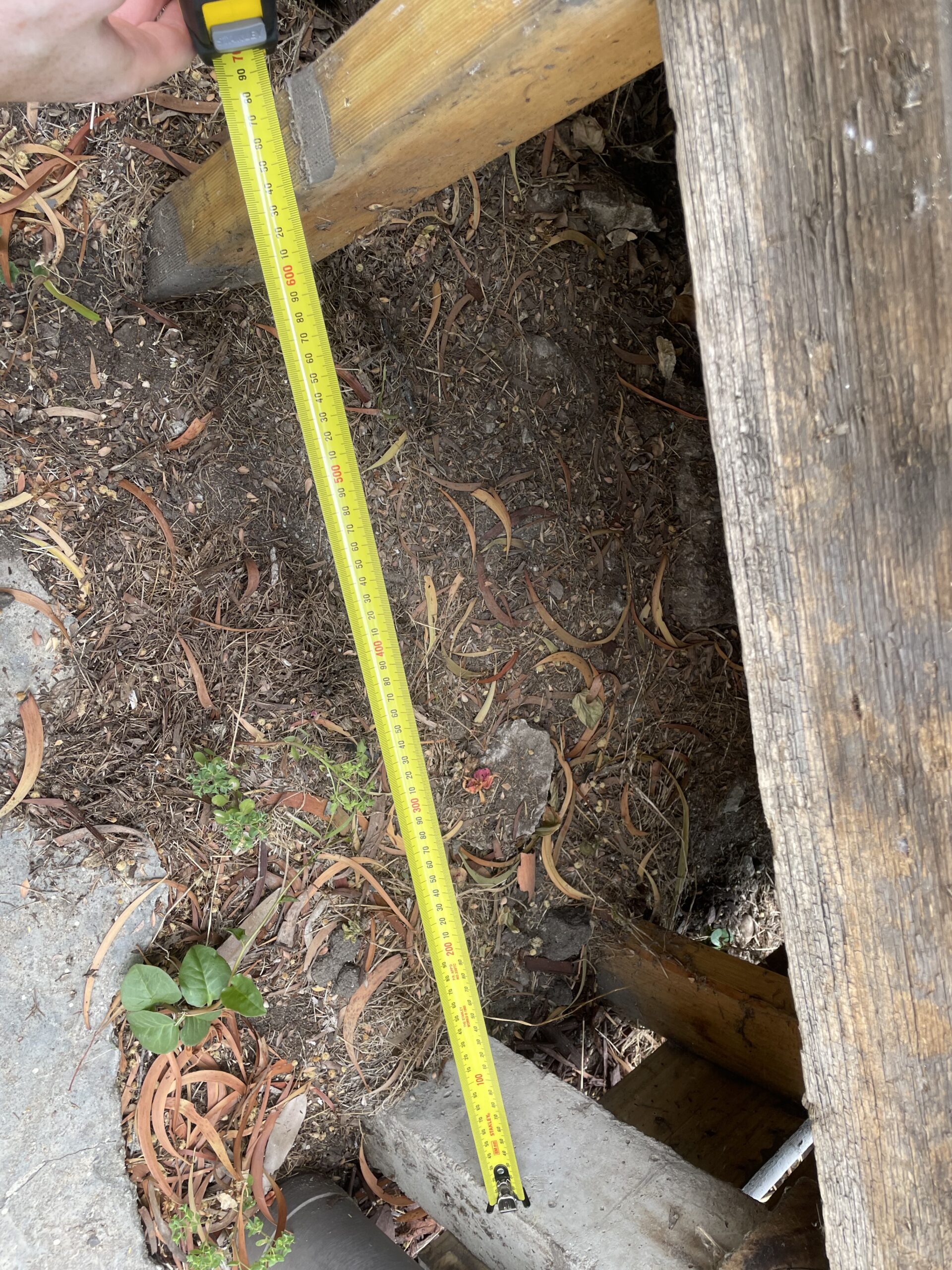
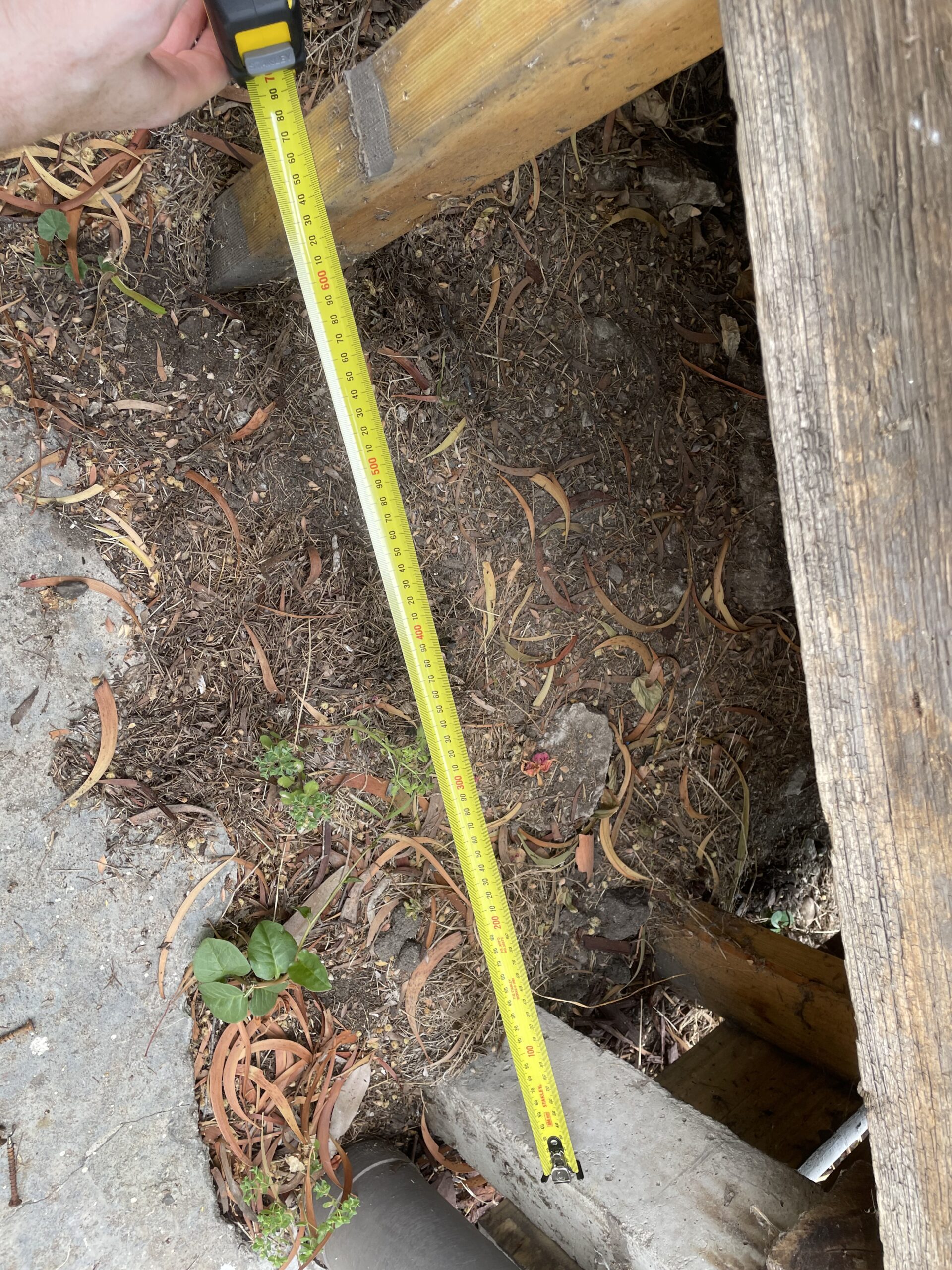
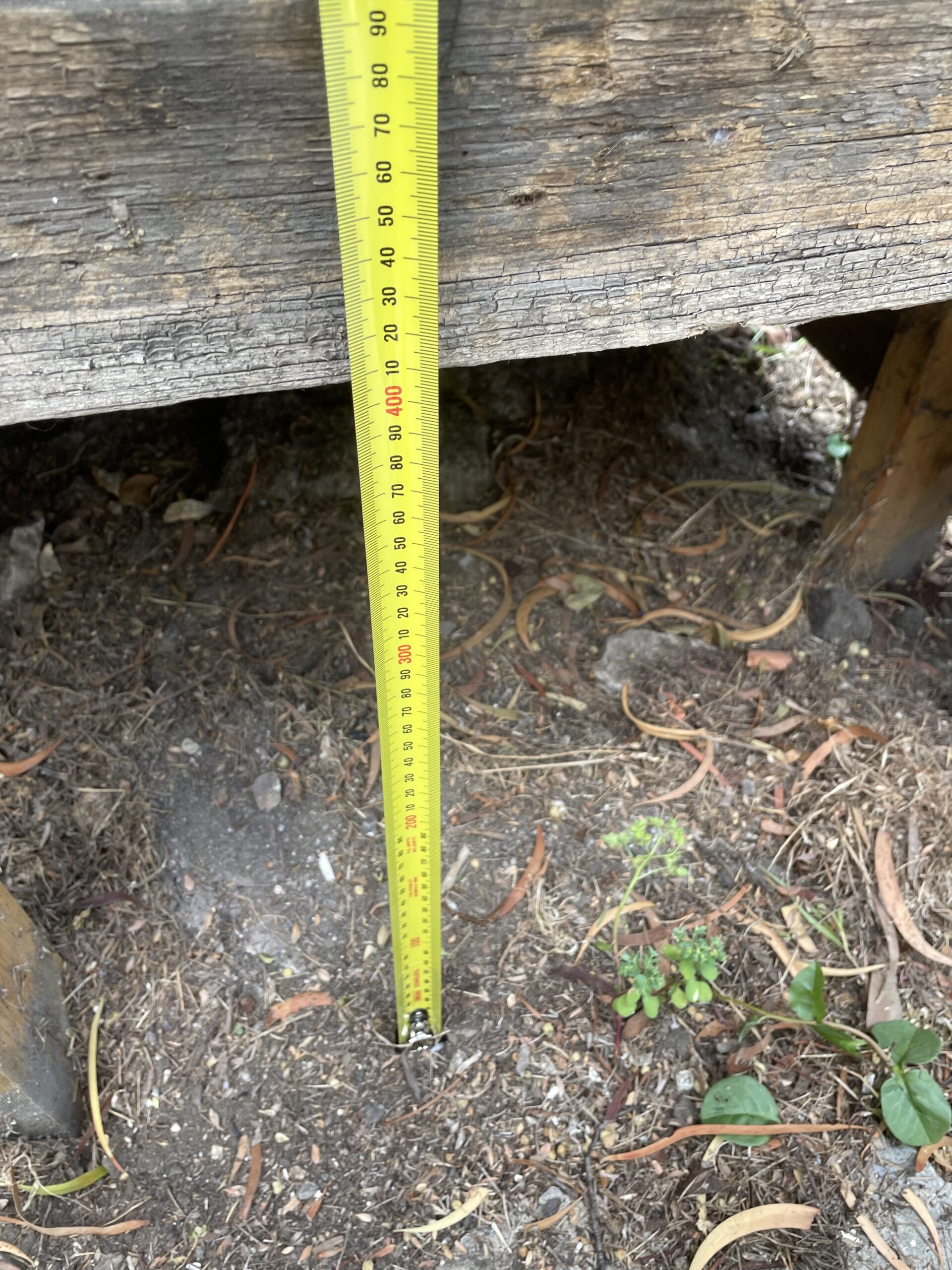
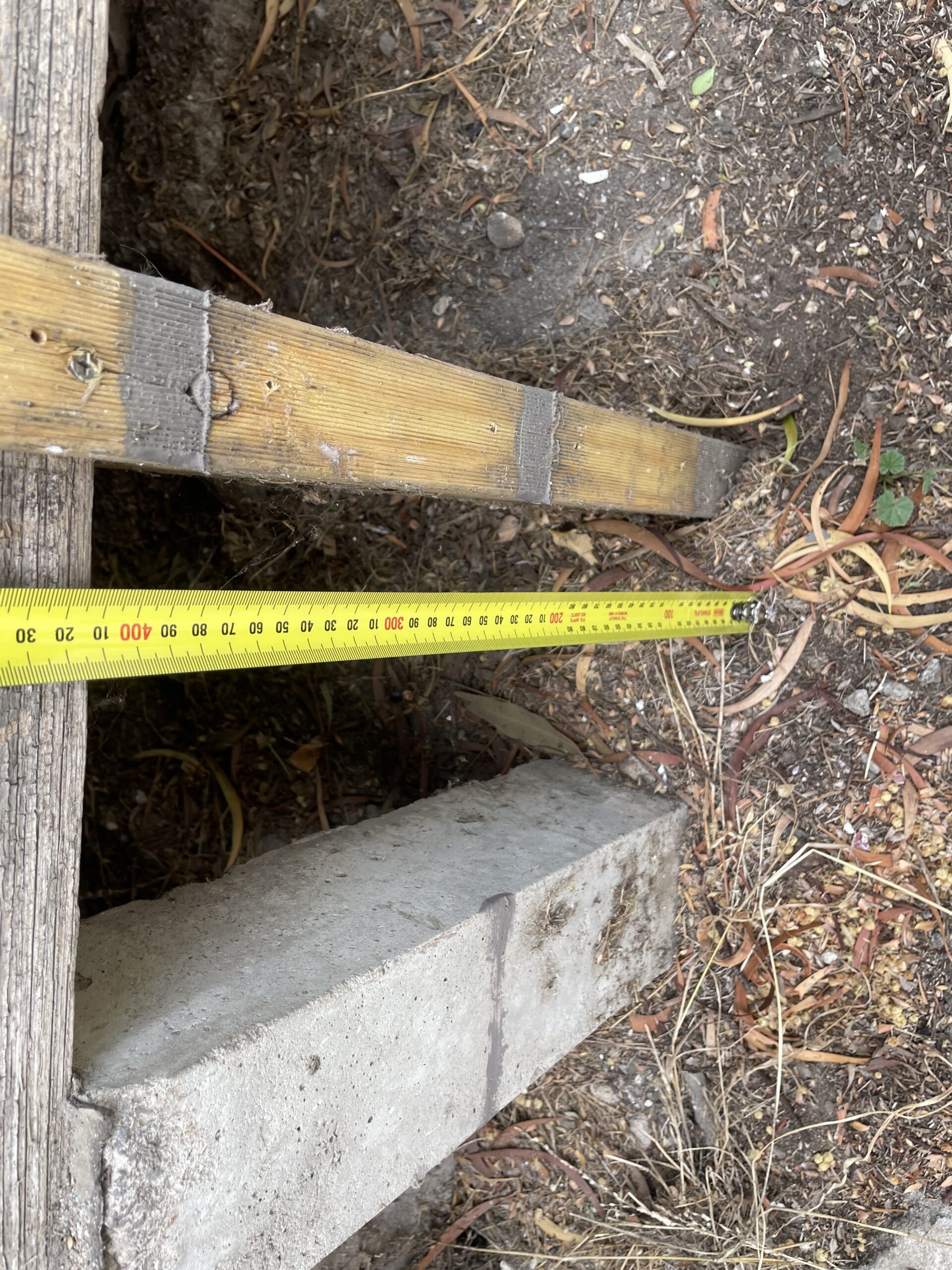
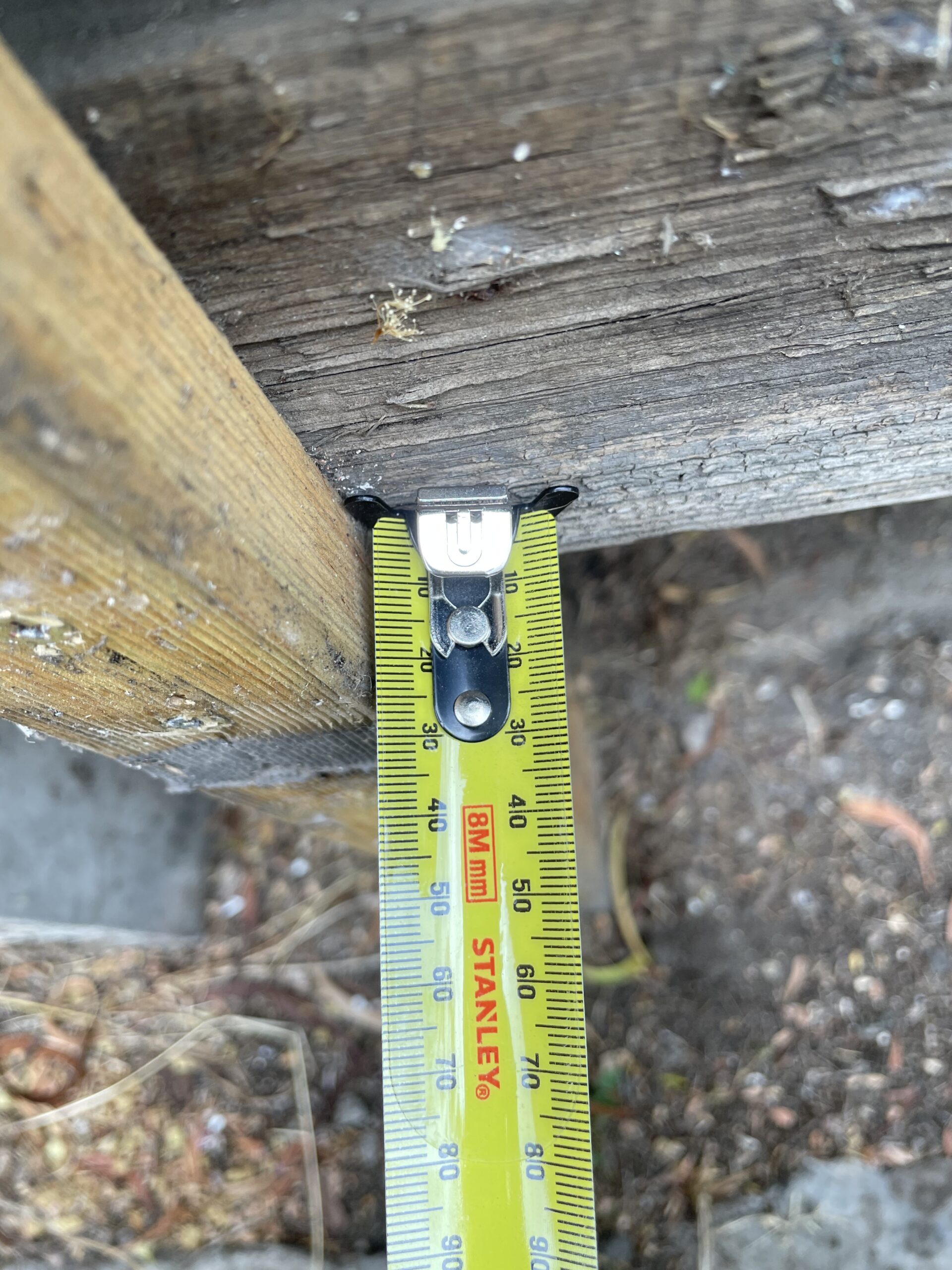
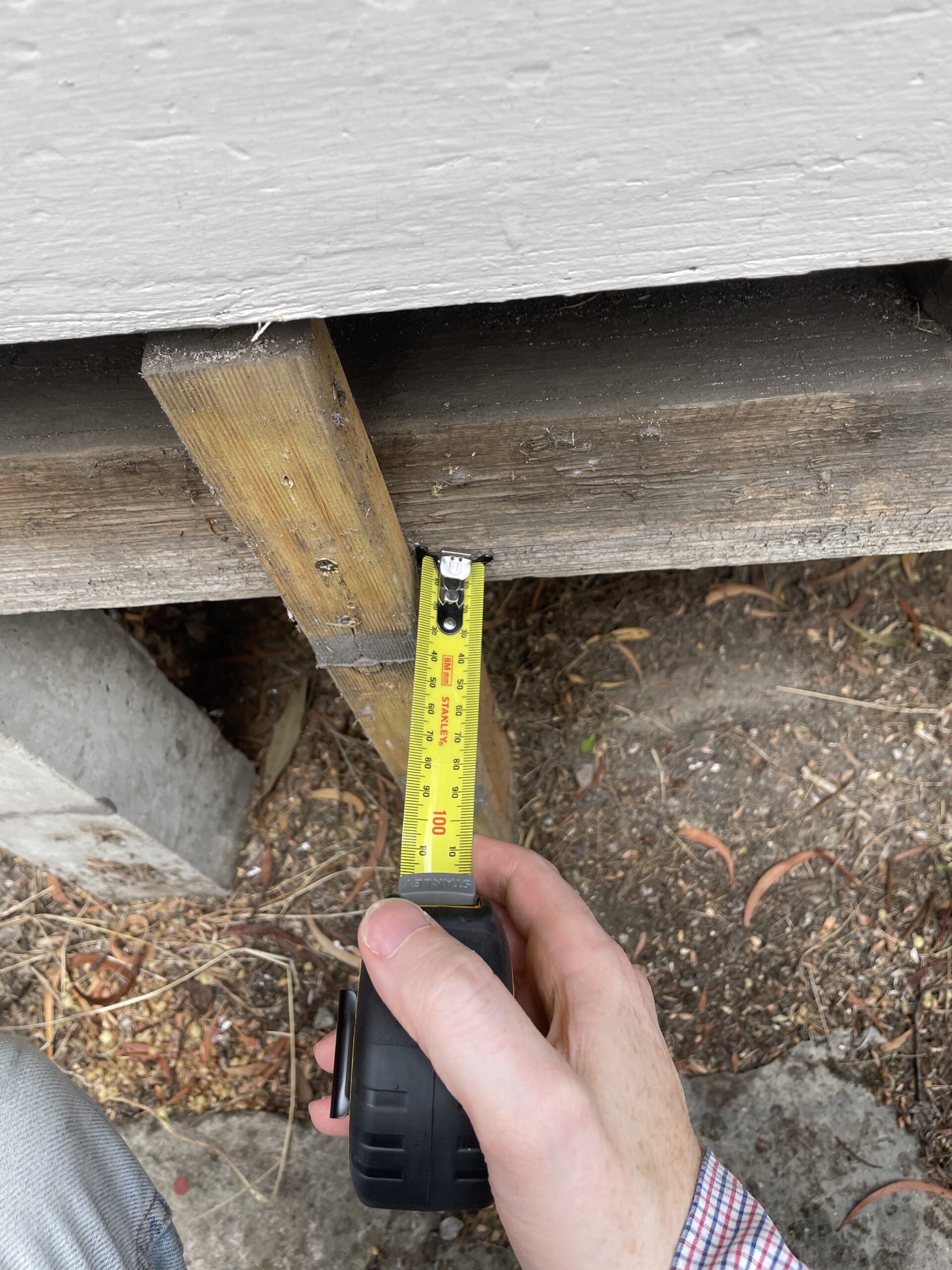
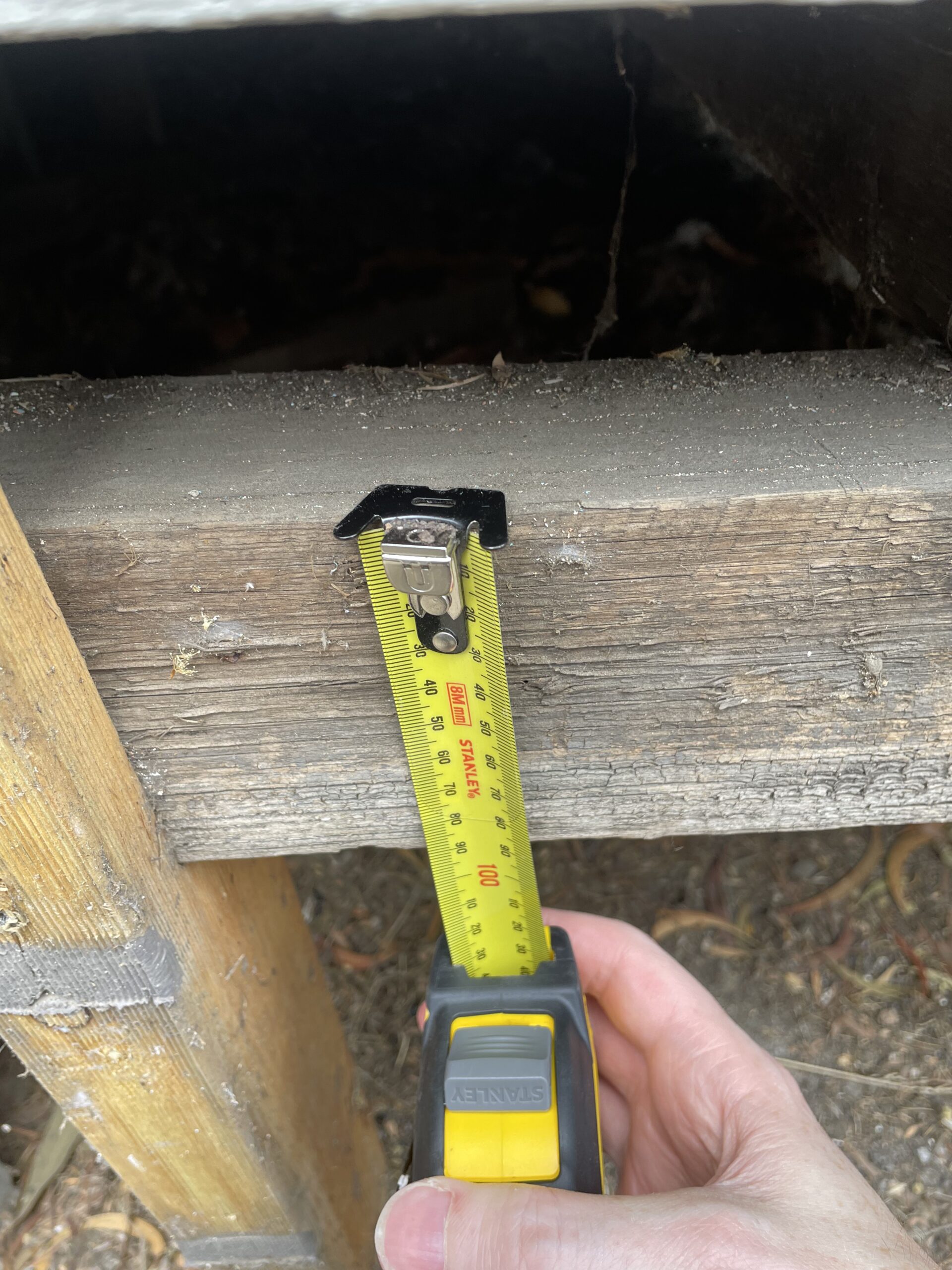
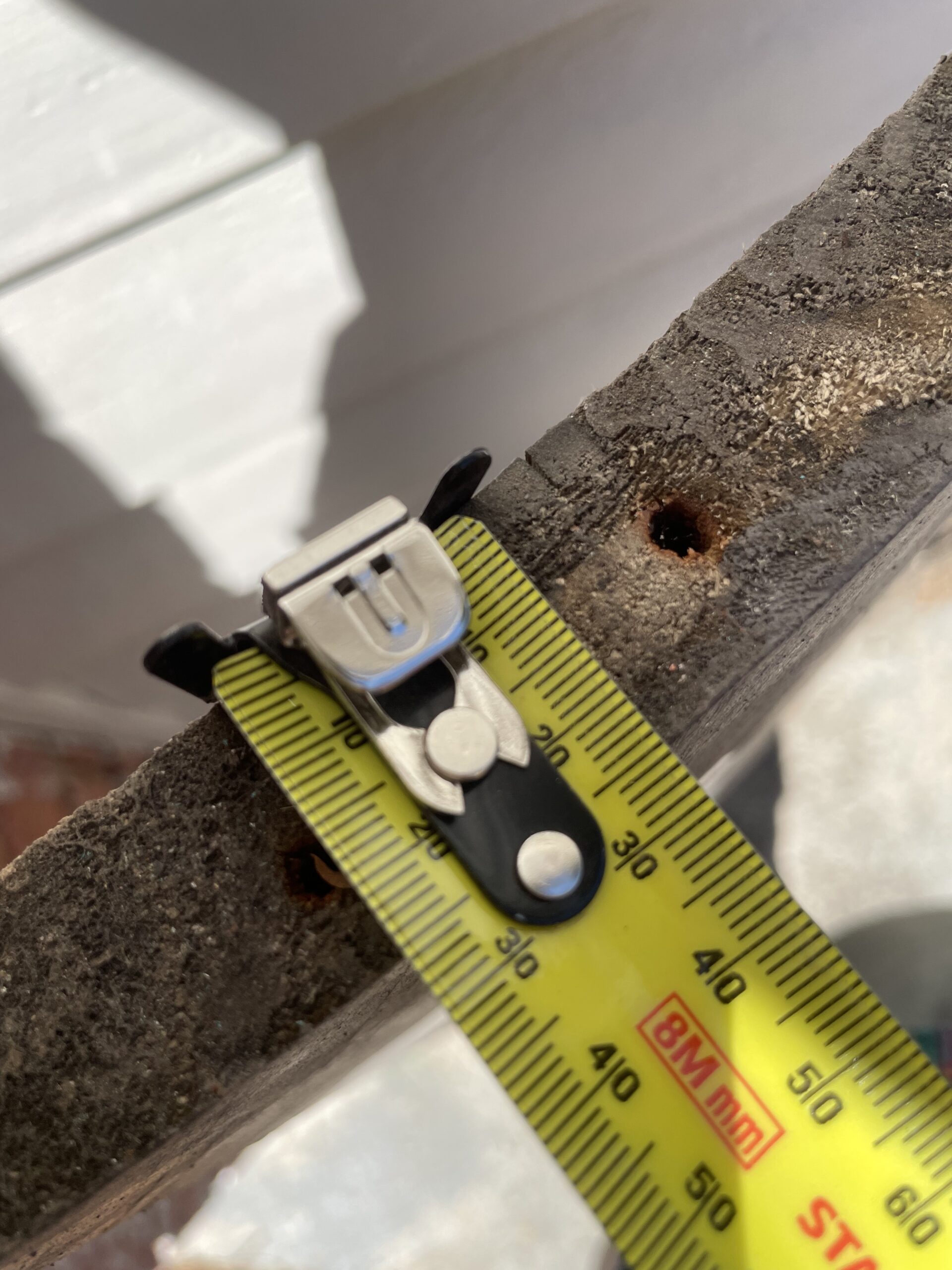
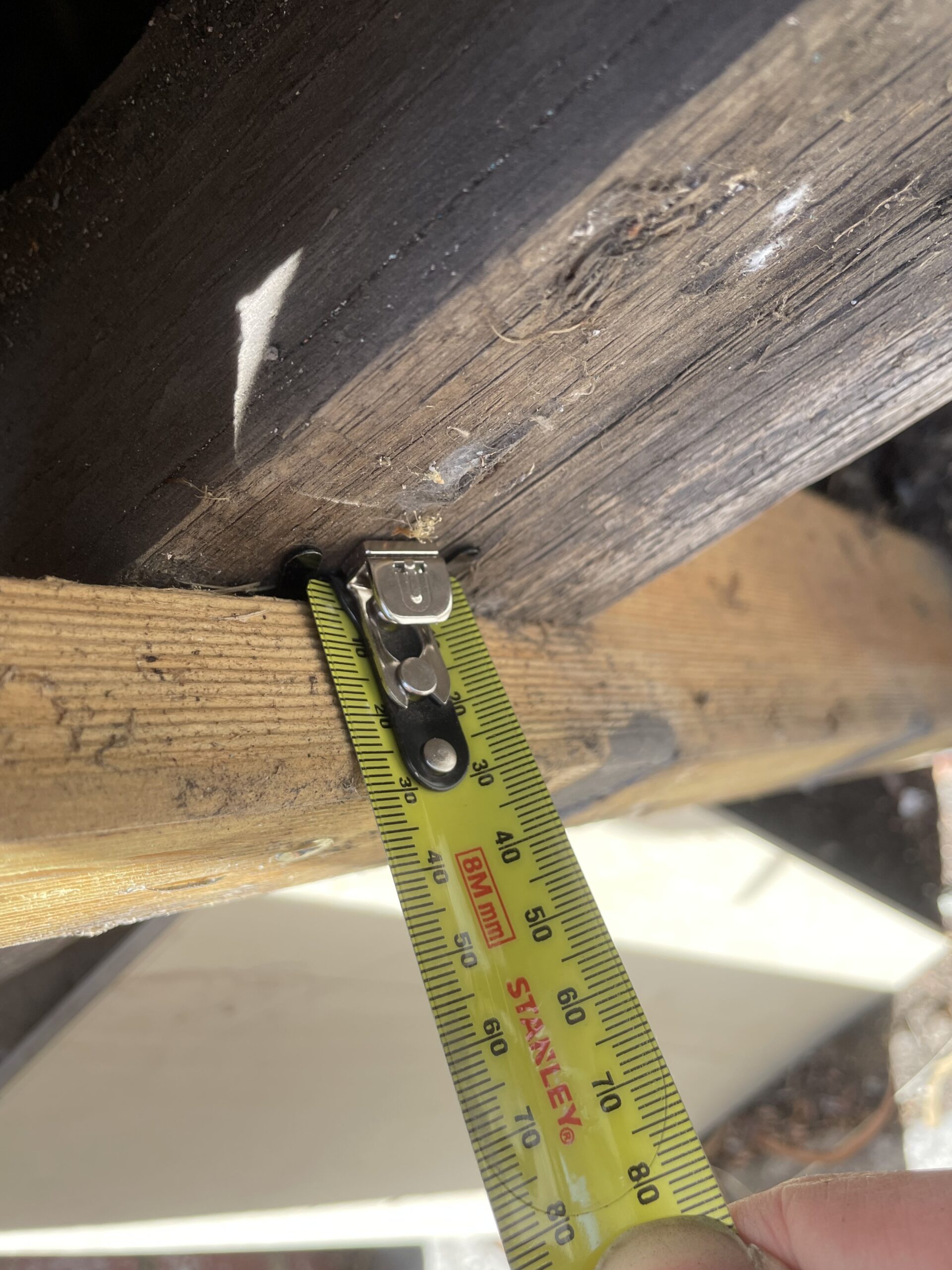
Next, to the hinges. I decided to use these great quality outdoor hinges and paint them black. But the problem is there was no way to mount the hinges to keep them invisible while also allowing the hinges to work properly.
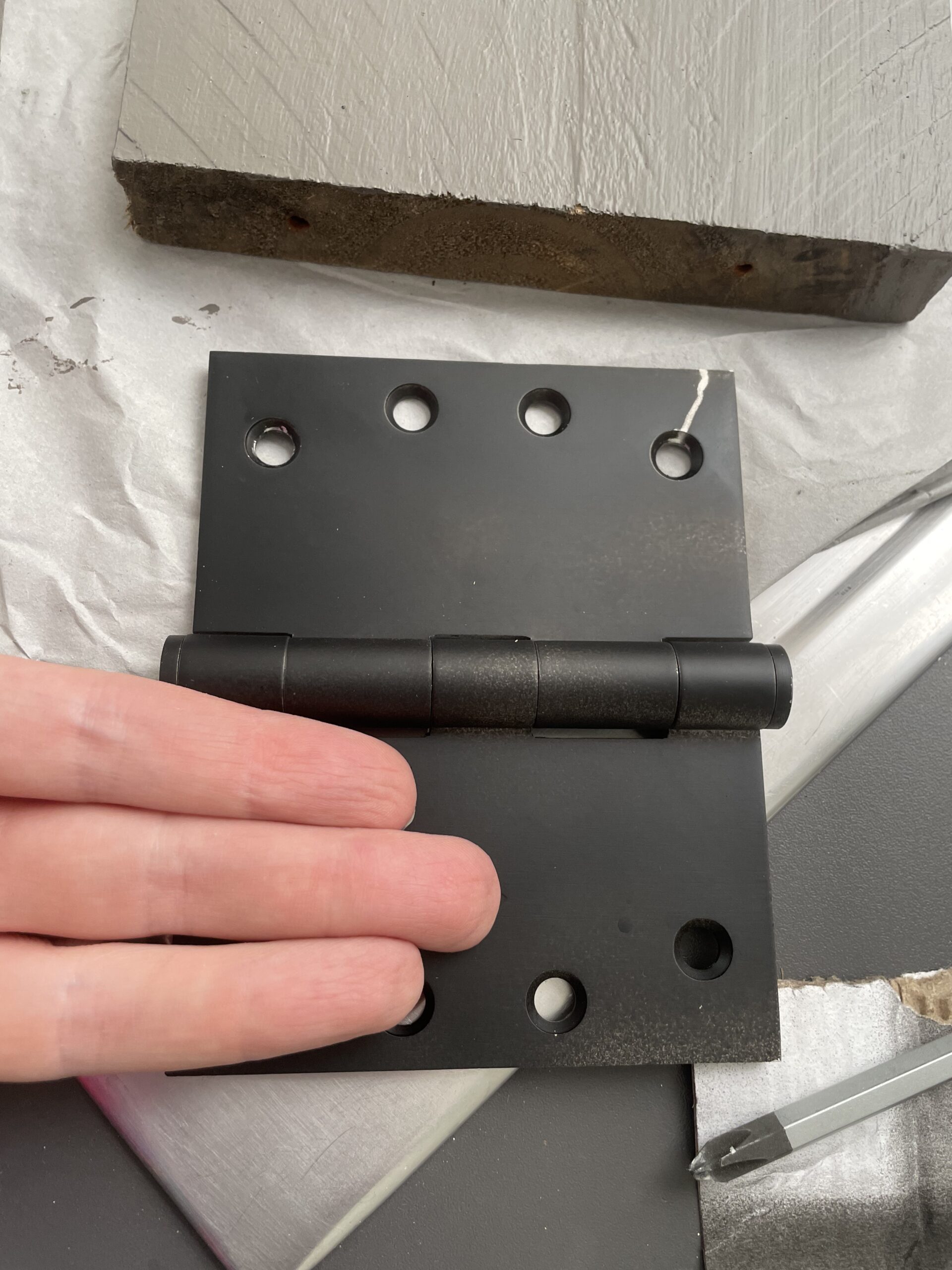
Unless….
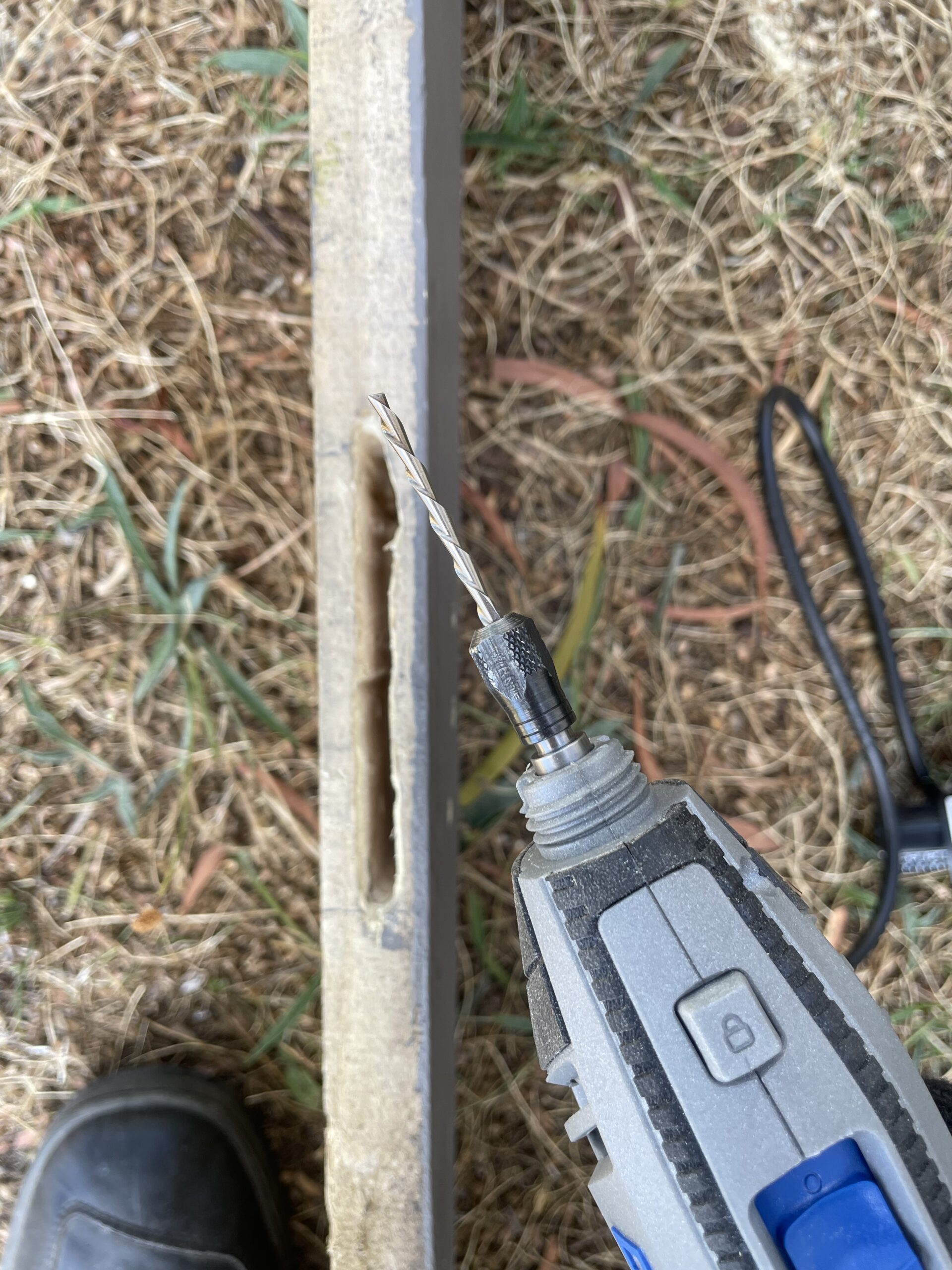
This one image belies many hours of work. I broke a Dremel bit and very nearly ruined a perfectly good piece of vintage cladding but in the end I think you will agree the hinge is worth it. I also had to chisel out the back of the wood so it would sit flush against the timber frame.
And when you look at it from the street, you can’t even see it at all.
Gate Patching
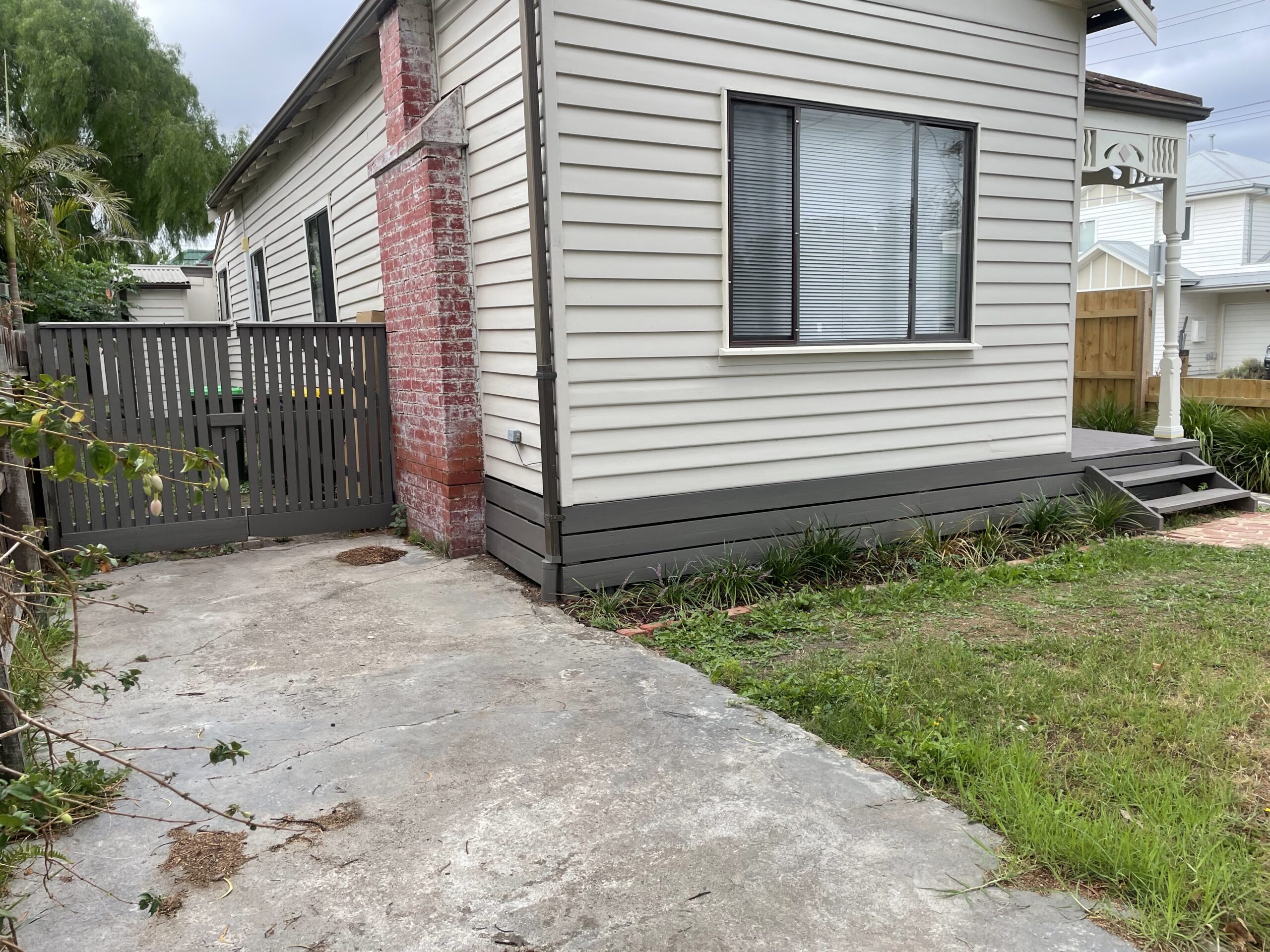
Tim aspires to automating every inch of the house, including the two gates, one on either side of the property. As a fellow geek I am keen on never having to unlock another gate again. As a South African though, I didn’t like the fact that the gates had no locks and the locks themselves were pretty old and rusty.
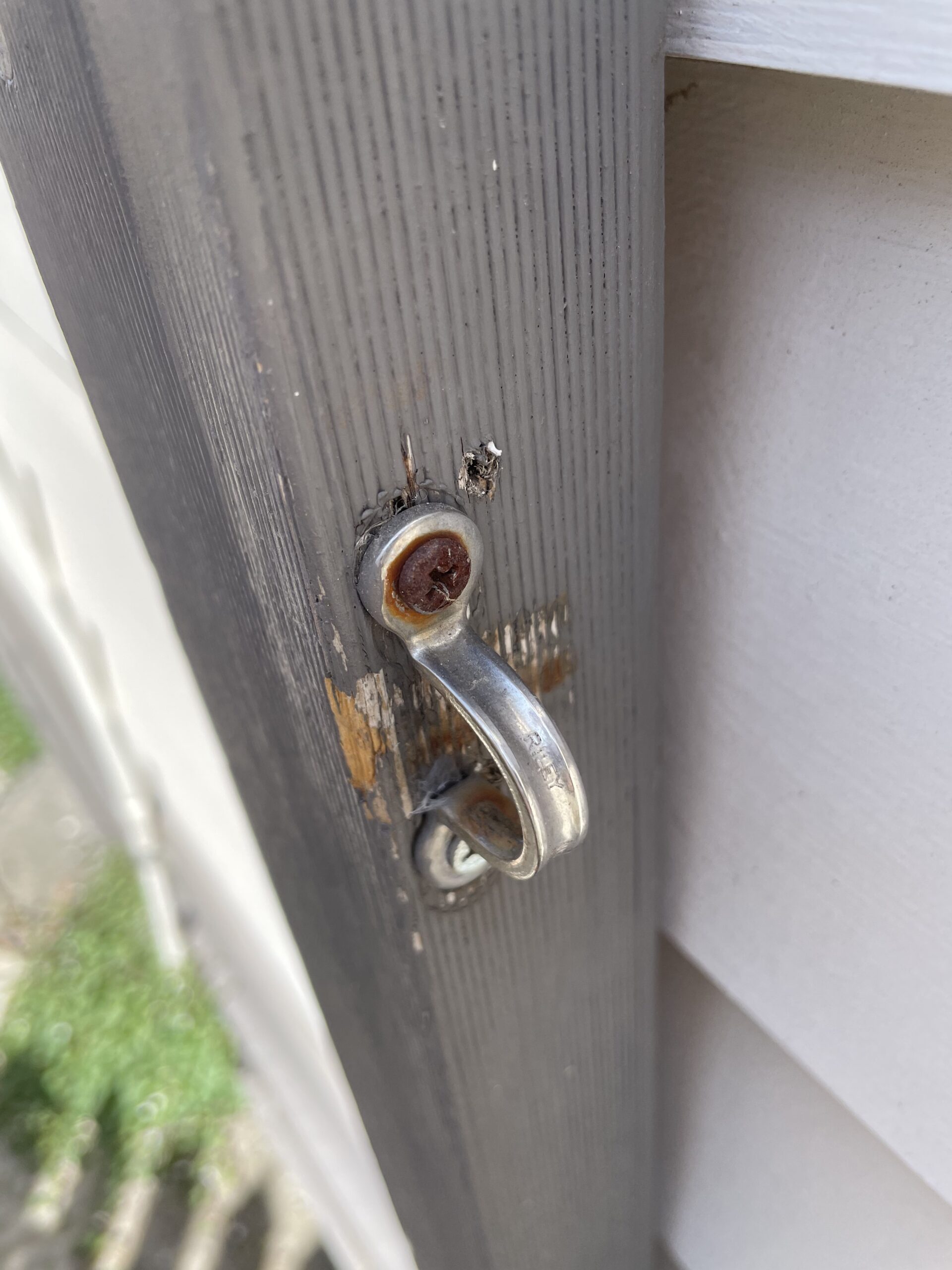
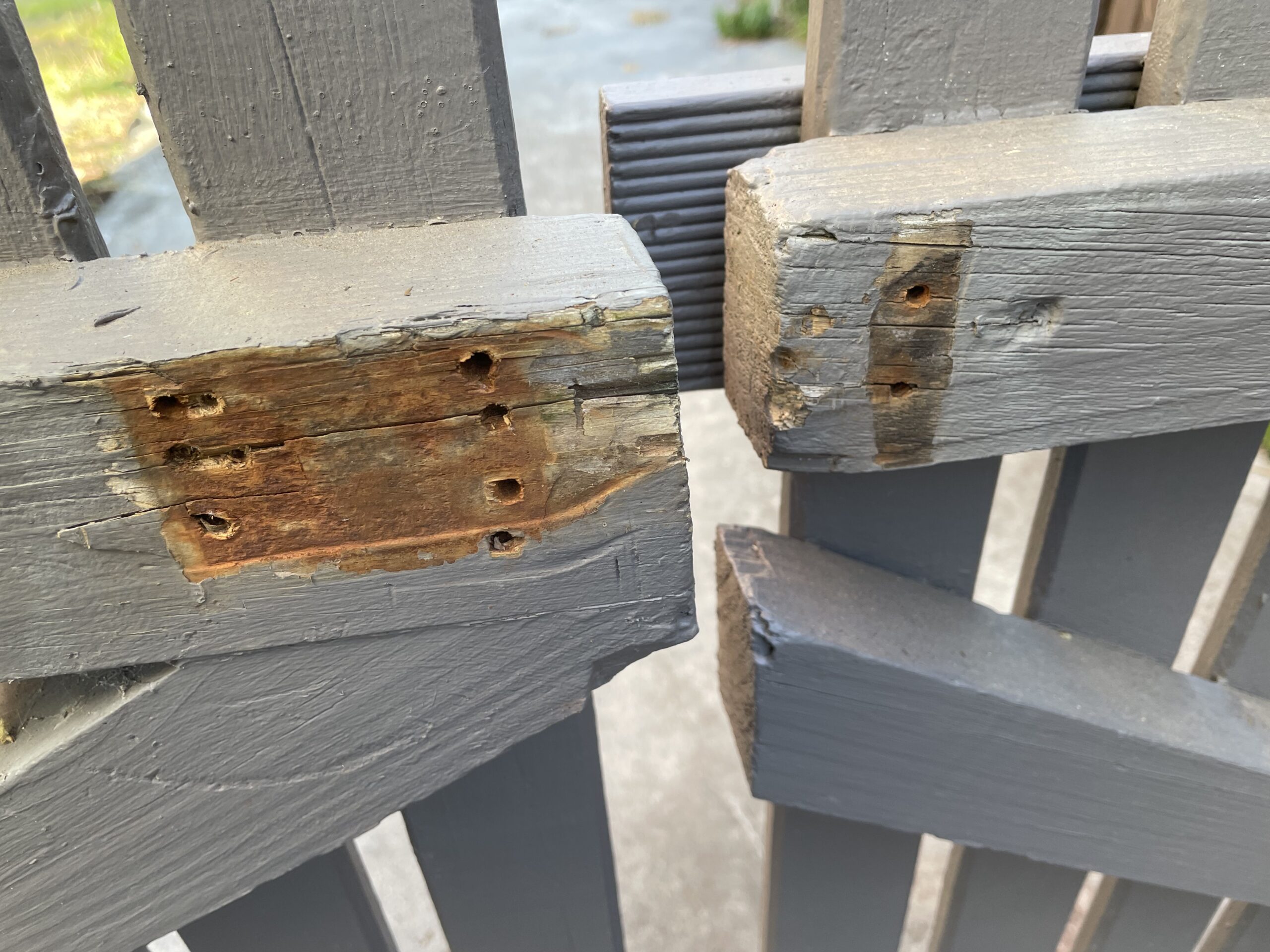
Notice all those holes? Well any new fixtures to those gates is not going to fare well if they can’t be screwed securely, and besides all those holes look ugly. Good thing I have discovered the amazing properties of wood filler.
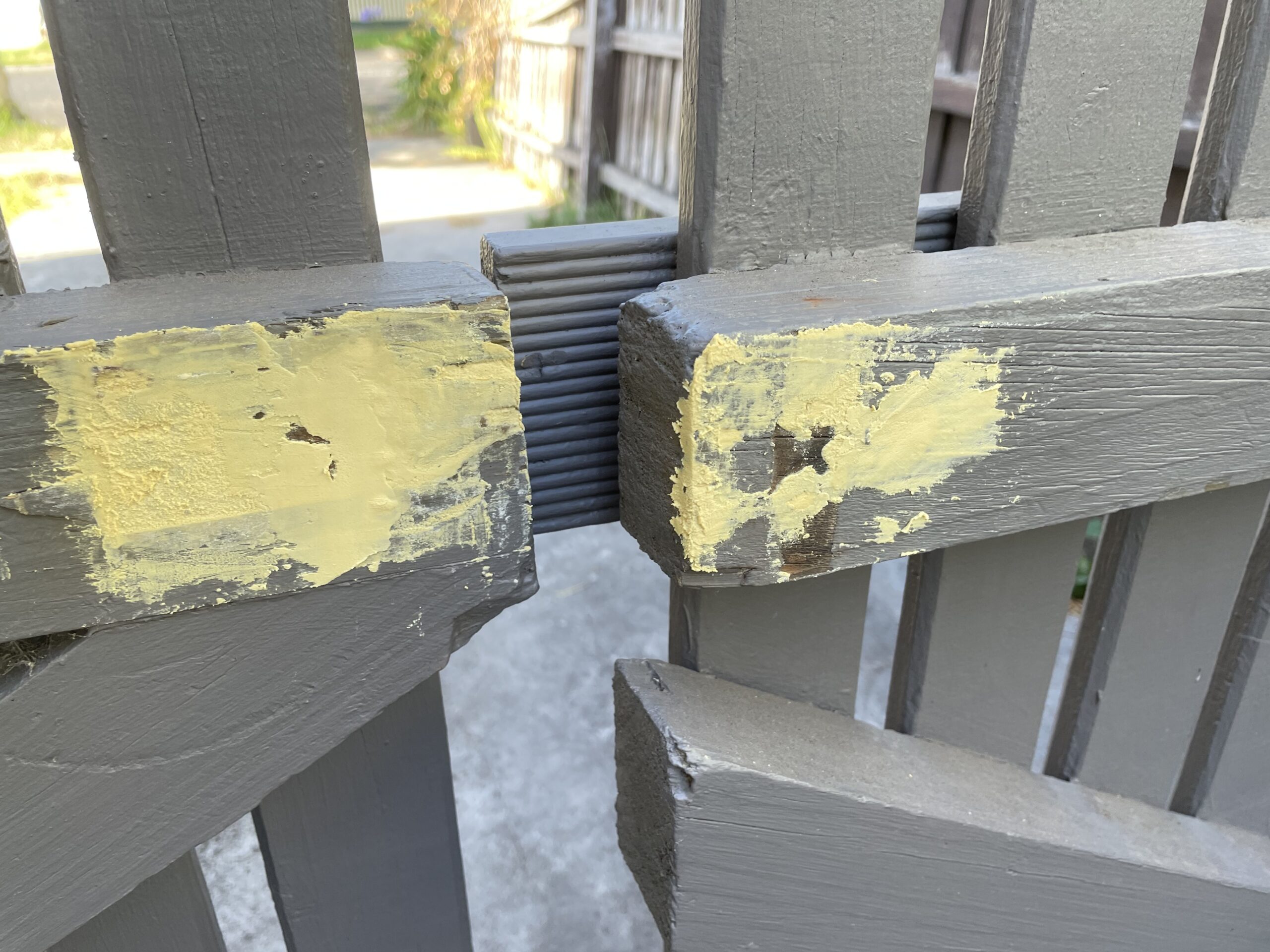
This stuff hardens in a few hours, it sands and holds screws just like normal wood!
But after the initial exuberance, I had my next challenge: what kind of paint to get.
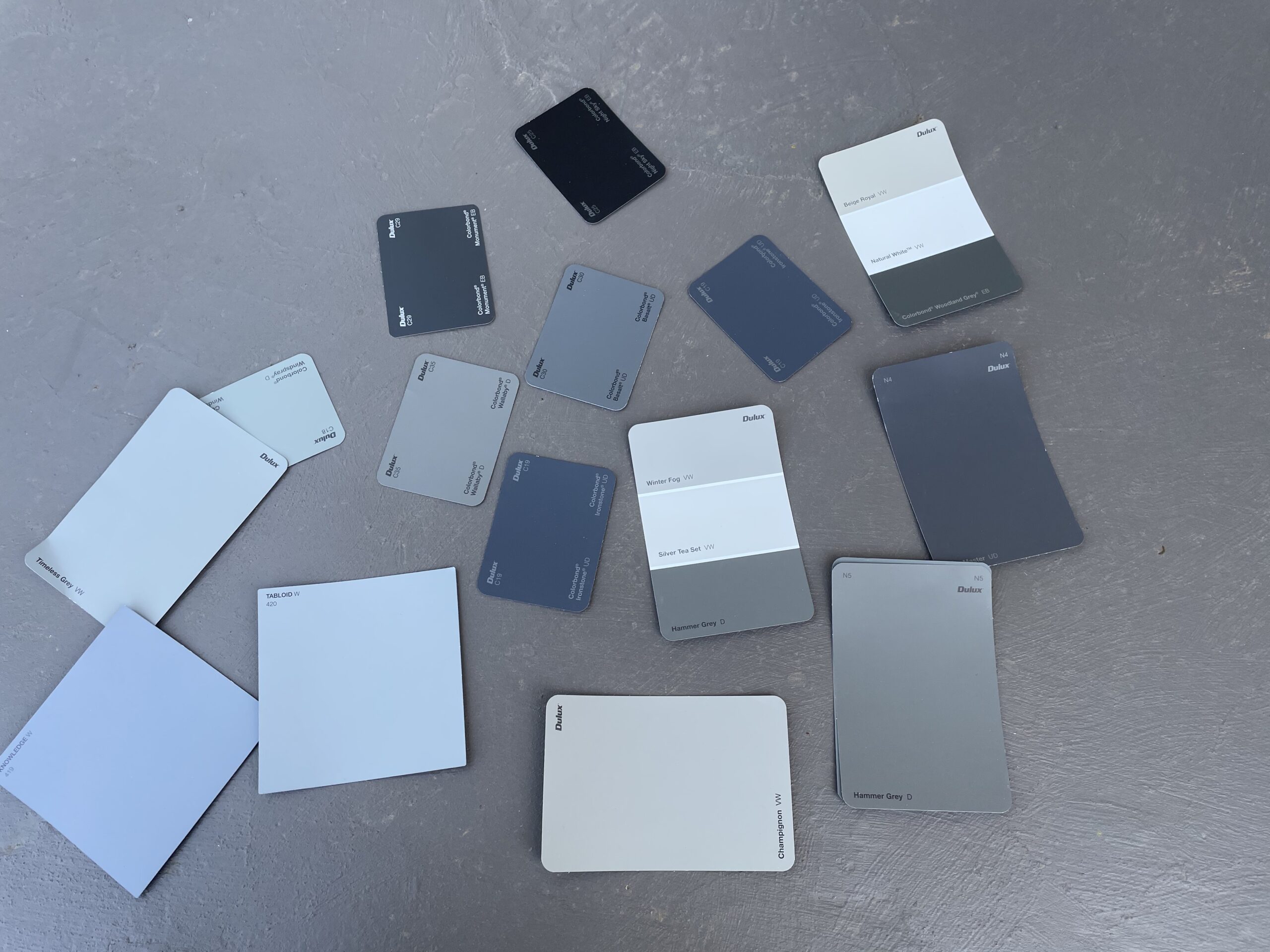
Which one of the following common colours matches the grey on my house? If you guessed none of them you would be correct! Turns out the grey of my house is called “space capsule” which doesn’t strike me as an original choice for a house from the dawn of the 1900’s.
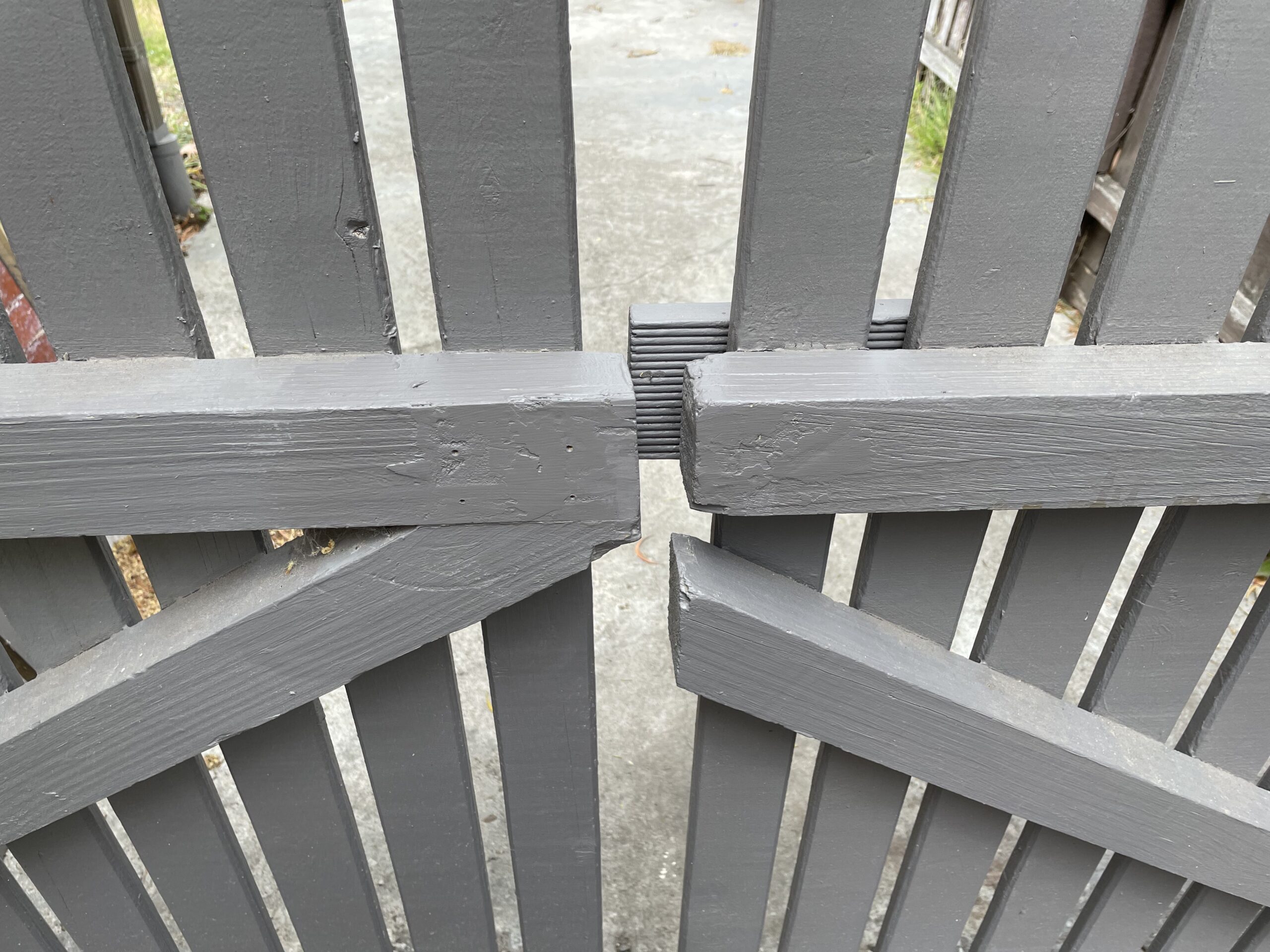
That said, you can’t argue with a perfect colour match.
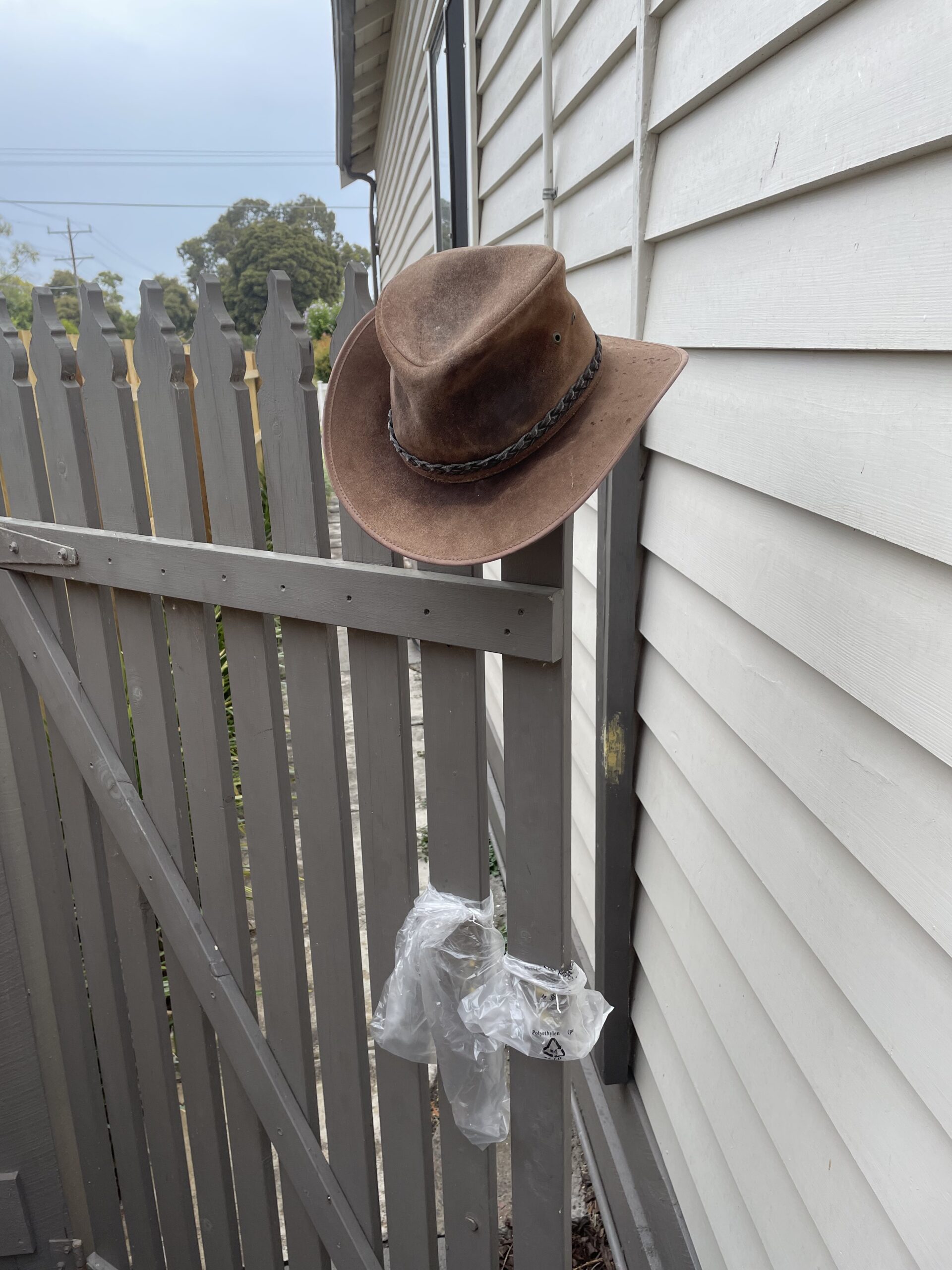
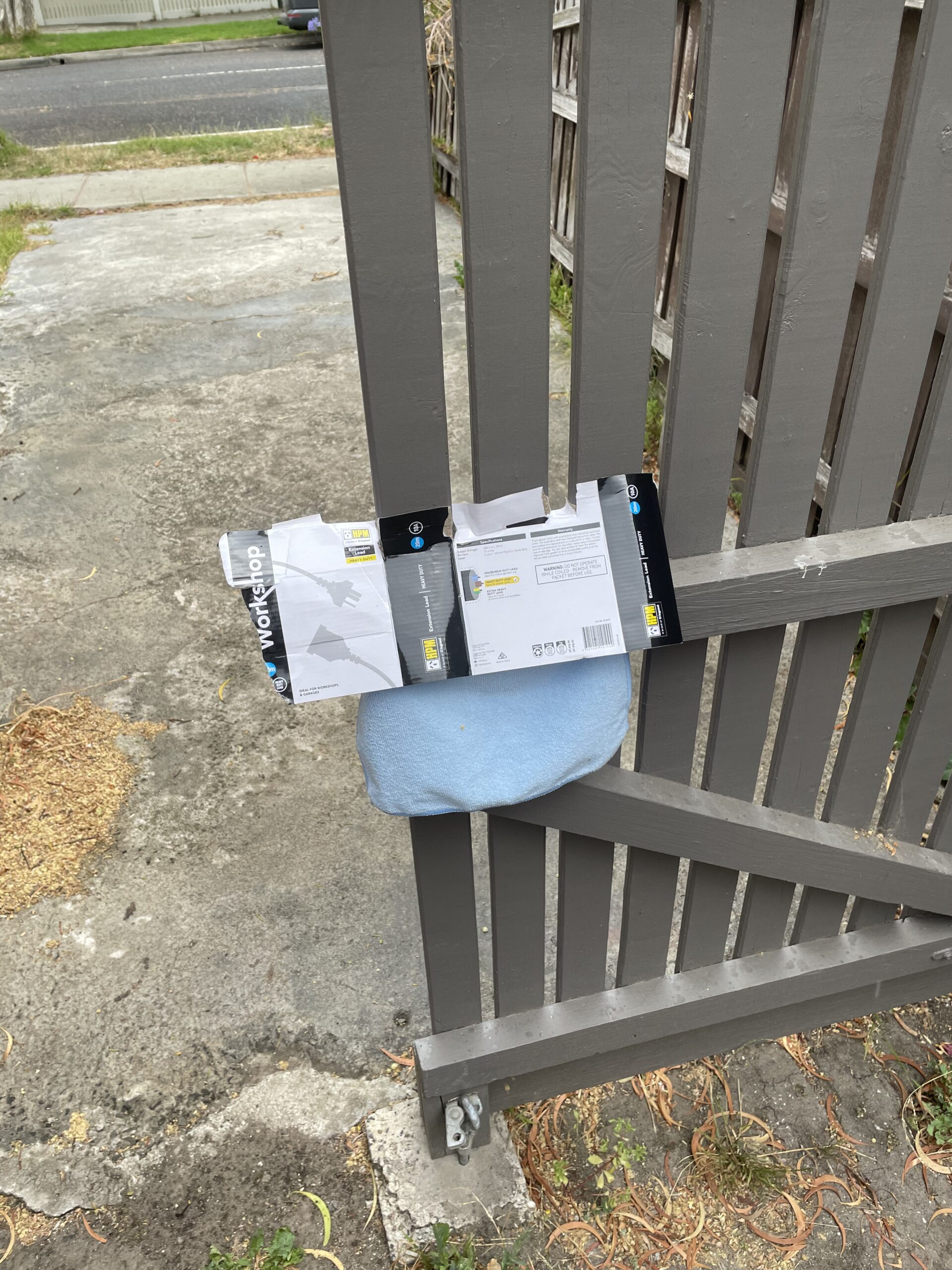
I had to get just a little bit creative since I needed at least 2 coats of paint and the rain threatened to ruin my day.
Still, I managed to get it all working in the end.
Uh… let’s try that just one more time.
You might think me paranoid, but wouldn’t you know it, only a month after I had the gates properly secured with locks but the security was tested by some guy coming in off the street, but more about that story later.
Front Porch Pillar
One of the first things I noticed when starting to plan what to do with the house was an issue with this pillar here on the front porch:

Hard to see right? Well, it became apparent when someone (no names mentioned) kicked the pillar by mistake.

Uh oh! Clearly this is rot. I was worried that the rot didn’t go all the way through to the pillar because that is partly holding up the porch’s roof!
Basically rotted wood comes away like sponge. There’s no point in trying to preserve it, better to get all the rot out. For my troubles, I had a spider escape from the wood. I was not pleased.

Did I get it all? Maybe if I just give it one extra scrape…

Oh bugger, well the good news is the actual structural timber is fine, thank goodness. Looks like the moulding has just succumbed to rot. I removed those vintage looking nails and managed to find the exact same mould pattern at Bunnings.
To get the nice clean 45 degree mitre joins on this, I would need to invest in yet another tool, a mitre saw!

Problem is, I don’t have the patience to read the user manual, and Tim doesn’t trust me with sharp spinny objects unless someone reads the manual so….

My poor long-suffering boyfriend was on mitre saw duty.
Meanwhile, I liberally applied wood hardener to the structural timber, just to ensure the rot didn’t make it any further into the hard wood. Just my luck though it started raining. Hot tip: don’t cover your wood in plastic like this, it’s just doing to get soggy anyway.

Once dry, I primed everything and used nail & glue to create 3 sides of the box for the moulding to fit over the column.

I didn’t have the heart to tell him that it didn’t have to be all that perfect. I slathered the whole thing in Selly’s “no more gaps” to prevent water getting in again.

Like all good workmen, I don’t actually have a photo of the finished product, but trust me, it looks great, you can hardly notice it!

Here’s a better way to protect against rain. You want a bit of airflow around the wood so that it can dry properly.
Welcome to my House
After many years of not being able to, I feel very fortunate to have been able to finally buy myself a house. It’s an elusive journey for many of us and I know as well as any what a rare privilege it is nowadays. I managed to find a nice 2 bedroom place in a “heritage overlay” in the suburb of Newport.

The heritage overlay means you can’t make too many changes to the outside of the house, especially because it is considered “contributing” to the character of the neighbourhood, but quite frankly, were it not for the heritage overlay I wouldn’t have been able to afford to live so close to the Newport train station which is only a short train ride into the CBD.
The house itself is about 116 years old, and that’s foreshadowing a lot of amateur history research in my not too distant future, for now I am just glad the previous owners had the presence of mind to remove the fake brickwork that was probably applied in the 80’s

Speaking of the previous owners, we had a cute little ceremony where we handed over the keys and put up the “sold” sign, once all the paperwork was signed:


I’m looking forward to sharing the journey with you as we peel back over 100 years of history and learn about what makes a house good.
For those interested in seeing a 3D reality capture, look no further than here:
Autism
I worry that compared to my written communication I am a disappointment in person, and this frustrates me. I worry that I come across as disingenuous, inauthentic or insincere. I will often have people come up to me and say something nice to me about how they enjoyed something I wrote, or valued a piece of work I have done. And I try – I try so hard to “perform” the level of social engagement they expect from me, but it always feels like it falls flat.
Till recently I didn’t know there was a name for this feeling
“I was thinking maybe I should get tested for spectrum things haha” I said during a recent online session with my psychologist.
It’s a common thing. You read online about people with ADHD or similar challenges and think “oh, I kind of feel a little bit like that sometimes” and you start to wonder… A lot of my friends who are “on the spectrum” tell stories and exhibit behaviours that are quite familiar to me, and I have wondered if I have some real developmental similarities with them.
“Oh yes, me too, I was thinking the same thing” my psychologist responded with an almost alarming level of unexpected enthusiasm “I’ll get you an autism test. You do mean autism right?”
“Uh, sure!”
And so it was I found myself taking several tests. I’m on the autism spectrum.
AQ – 28
EQ – 59
CAT-Q – Total: 156; Compensation: 53; Masking: 49; Assimilation: 54
Nothing really formal, but my psychologist is confident enough that it’s a useful diagnosis. I was never diagnosed before because I “mask” quite heavily. “Masking” is what autistic people do to compensate and camouflage our behaviour so we appear more allistic (we can talk about masking in a bit).
When Bleuler coined the term ‘autism’ in 1911, he attributed its etymological roots to Freud (with all the attendant baggage Freud brings into any conversation). At the time, autism was considered a type of delusion, a disengagement of reality, in some ways a kind of failure to develop beyond thinking outside ones own head. As far as I can tell, the term Allistic was chosen some time later by the autistic community to refer to people who are “not autistic”, simply because the Greek word “allos” (for other) is the opposite of the Greek word “solo” (for self). Autists are in the minority of the population, about 1-2%, though there is reason to believe the true number is possibly as high as 4%. This is why we think of “allistic” as “normal”, though of course it’s a bit reductive to talk about things in terms of normal and abnormal.
When thinking about autism, you might think of the characters from Rain Man (Raymond Babbitt), Big Bang Theory (Sheldon Cooper) or The Good Doctor (Dr. Shaun Murphy). The classic autistic trope is one of a smart, awkward, geeky white boy with a special skill. I confess that this is usually what I used to think of as a short-hand for autism, before I learnt more. Thanks to the book Unmasking Autism (highly recommended by the way) I understand it a lot better. We also don’t use the term Asperger’s Syndrome anymore, favouring ASD or Autism Spectrum Disorder.
Autism is not a new idea to me. My little brother John is autistic and practically non-verbal. Something that has caused him severe difficulties in development and life, and means he has to live in managed care. I have many autistic friends of all backgrounds and persuasions. On reflection I would go so far as to say I am drawn to autistic people generally in my life. Autistic people are generally easier for me to deal with. My psychologist suggests this could be due to a mechanism called “double-empathy” – a theory where allistic and autistic people often misunderstand each other, not that autistic people lack empathy.
So, I am not averse to the autism label. I would go so far as to say I like it, it’s helpful. Labels aren’t always helpful and they can sometimes be harmful, but for me, this label is useful because I can now start to better put a name to one more part of myself.
“So, how is that for you?” My psychologist asked me in his usual open fashion. “How do you feel about that label for you?”
“Well, it’s like when people used to ask me ‘what’s it like to be gay?’ my answer was ‘well, you tend to like limes'”
This is a joke of course, liking limes is a me thing, but I don’t think it’s a generally gay thing. The idea of the joke is to emphasise that we only truly know our own subjective world, and so it’s very hard to tease out what parts of ourselves are attributable to specific labels.
“I would say that the label is not very useful but…” I considered what I was thinking in real time “…but I am starting to recontextualise different parts of myself with that label, and that’s useful.”
“And you might consider not masking quite so much” He prompted gently.
“Oh… yeah…”
My biggest worry with this informal diagnosis is what I think of as “stolen valour” or (as an autistic friend more accurately pointed out) “impostor syndrome”. I enjoy watching “The Good Doctor”. I admire the character Dr. Shaun Murphy. I also clearly don’t share the visible degree of disability he has. I have autistic friends who struggle a great deal with everyday life. An autistic friend recently killed himself because autism meant he couldn’t fit in, and it seems disingenuous of me to claim a shared affliction with all of them when I “got off lightly” in a relative sense. I don’t want to diminish the struggles of my autistic friends by jumping up and down saying “me too, I am special too”.
But even so, I know I process information differently, and I really struggle in social situations. I used to think this was just run of the mill shyness or introversion, but maybe this diagnosis will help me understand a part of myself and help me live easier in my own skin.
So, the purpose of this post is in part for my benefit. I have started compiling “evidence” of my autism (I did something similar when I came out as gay nearly 2 decades ago). I would say I don’t care if anyone believes me but I kind of do. It’s common in later life diagnosis where people will say “oh, but you don’t look autistic” or “everyone feels shy and awkward sometimes” or even “everyone is a little autistic”.
Although understandable, I don’t think these responses are helpful. That last comment is also not even true. We talk about “the autism spectrum” not because it’s like a scale from “Fully Allistic” to “Super Autistic”. Instead, Autism or neurodiversity manifests as a spectrum of behaviours and presentations, so it’s hard to pin down. Autism is a spectrum like a full rainbow of colours, rather than a scale from 1 to 10.
That said, from the research I have done, the key root of autism is to do with how we process information. Autists process information “all in one go”, neurons are more easily activated and so it’s harder to filter out important information from unimportant information. This leads to several common developmental issues, which result in a few common kinds of behaviours / traits.
- Difficulty in social situations, understanding social cues
- Difficulty knowing how to properly “affect” an emotional response
- Can be overwhelmed by stimulation (audio, visual, touch, taste)
- This results in stimulation avoidance or (paradoxically) stimulation seeking
- Limited “working memory” meaning some kinds of processing is more difficult
- Difficulties with interoception (knowing what the body is doing)
- Difficulty context-switching
- Preference for logical rules and well-defined roles
- Special interests
Here are a bunch of things I do that I now think of as autistic.
Social and communication, affecting responses and masking
This is the most distressing / upsetting part of autism for me, so I thought I would address it first.
Autistic people struggle with social situations. Not because we don’t want to socialise, but because of the effort it requires to process and respond to all the social information in real time. We risk doing or saying the wrong thing. People like me who mask heavily have come up with a bunch of tricks to help, and work very hard to do a good job, but the internal experience is still there.
I am good at communicating via text. I am a good writer and I love to write. Autistic people tend to prefer written communication because we can take the time to consider what we are writing and how it’s going to be perceived and understood by others.
I worry that compared to my written communication I am a disappointment in person, and this frustrates me. I worry that I come across as disingenuous, inauthentic or insincere. I will often have people come up to me and say something nice to me about how they enjoyed something I wrote, or valued a piece of work I have done. And I try – I try so hard to “perform” the level of social engagement they expect from me, but it always feels like it falls flat. I don’t remember their name, even if I have worked with them for years. I have a deep disinterest in the small-talk part of the conversation which I know is so important but I find difficult to fake. I have to consciously smile, change the tone of my voice and emote in a way that’s natural and pleasing. It’s hard work and I sometimes resent it even though I know no one is forcing me to do anything.
When I write in text or when I present a pre-prepared story, I can be charming, funny, interesting, thoughtful, kind. I can make sure that all the things I want to communicate are communicated well and have the right effect on people. Even an off the cuff speech is a unidirectional engagement and I can do that pretty well on the fly because of all the work and practice I have done.
One of the best things that ever happened to me was joining a small 5 person choir (a quintet) in high school, called the Deo Fretus Quintet. I had to learn to develop a stage persona so I could confidently appear in front of a crowd. Without that experience and all that training, I would be a very different person today.
Speaking of practice. I read every single email through start to finish before I send it. I then re-read every single email at least twice after sending it.
With verbal communication, I rehearse conversations in my head. I rehearse whole conversations with multiple people constantly. After a conversation, no matter if the conversation ends well or poorly, I review the conversation in my mind, over and over.
This may come across as a weird confession: I love people but I hate small-talk. What I mean to say is I do care about people. I care about my friends and colleagues. I want them to be happy and I am a good listener to hear about and talk about their problems. At the same time I confess that I have a deep disinterest in the stories they tell me.
I love going out to dinner. I sit down and read the menu, then order as quickly as possible and I hate that awkward time between when we have ordered and the food arrives. A lot of allistic people would use this time for “chit-chat” for “catching up” for “talking”. I really would like to avoid that. The ideal social situation for me is I am at a meal with a large number of people who are all talking to each other, but I don’t have to talk to any of them myself. At the end of the meal, my partner Tim and I leave immediately. We don’t understand the value of keeping the table occupied to stare at each other for another 30 minutes.
I used to lecture at the University to groups of 400 students at a time. They would come to me after class and want to talk to me about my life. I didn’t know who they were.
I have aphantasia, meaning I don’t see images in my head. If I close my eyes, I can’t imagine the face of any single person I know, including my own. I would be rubbish with a police sketch artist. I can recognise faces though, I just struggle to attach a name to the face of many of the people I recognise.
I know people in my office who I have worked with for a decade, but whose names elude me. This is not because I don’t care. I care very much. Before social events, I will research people’s names so that I can get their names right. I actively avoid people in the office so I don’t embarrass them and myself by getting their name wrong.
If people do want to talk to me, I work really hard to “mask”. I ask the right questions, make the right noises, I monitor my body language at all times to make it obvious that I am relaxed and interested in them.
The hairdresser is one of the most stressful experiences for me. I find myself clenching the arm rests tightly and I have to remind myself constantly to let go and relax. I hate it when the hairdresser / barber asks me questions. Blessedly they are typically smart enough to detect who the chatty people and non-chatty people are.
I distinctly remember, as a child of maybe 10 or 12, deciding that humans were functionally a different species to me. That I was a robot or an alien (maybe both) and that I would have to do some work to fit in.
I studied body language and facial expressions, I practiced smiling properly. I internalised this later on as assuming that everyone had to go through this process.
Today, I am constantly monitoring my body language, facial expressions, the tone of my voice, to make sure that I respond appropriately to the person I am talking to. If I get caught off guard, it can take me a while to respond because I have to work extra hard to get the right combination of expression, body language, tone and content to give them a satisfactory answer.
Overwhelmed by Sensory Stimulation
At this very moment, my parents have the TV news going (Trump and his tariffs), I am sitting on the couch writing this text. My parents are elsewhere. Pepper the dog is barking in the distance, I can feel a fly buzzing against my foot, the psoriasis itching passively on my back. The room is dark but my monitor screen is bright, even though I have the brightness right down. The contrast swims in front of me in a kind of dizzying fashion. This is (as my shrink would say) a lot. I keep getting distracted by the TV, pausing my writing and being pulled from the flow of the story I want to write into the nonsense on TV. I don’t want to watch the TV. I would really like to mute the TV, but I don’t want to upset the flow of my parents’ lives. I think they like the TV on in the background as a familiar kind of noise.
I am starting to appreciate that the above little paragraph is a common autistic experience. I am not suggesting that allistics don’t get distracted, just that autistic people tend to process information all at the same time, and so we need to work harder to focus on the thing we want to focus on.
My poor patient boyfriend is often shushed if he speaks during a TV show or when we are listening to an audio book in the car. I have to pause the show and maybe backtrack if I want to follow what’s going on. More often than not, I just accept I won’t know that part of the story and just let it happen, since it’s not worth the disruption. If there are subtitles, I tend to get distracted by reading the subtitles and struggle to take in the broader story. It’s apparently common for autistic people to struggle with so-called divided attention.
Stimulation Avoidance
I had a reputation in school for keeping to myself, seeking less stimulation. During lunch break, I would sit on the tarmac or a step with my fingers in my ears and my nose in a book. I would also sit in the front of the class in a similar fashion, fingers stuck resolutely in my ears. I remember distinctly a day when I was in class, all the other boys (it was an all-boys school) were hollering and whooping behind me, kicking up a fuss because the history teacher wasn’t there. I sat at the front of the class near the door, fingers in my ears reading my book. I have to read sentences over and over sometimes to make sense of them, even though I am a voracious reader and I love to read. The maths teacher materialised in the doorway in front of me (I didn’t notice him). The throng behind me immediately went quiet and stood at attention (it was a strict all boys school). The maths teacher then berated me for disrespecting him when he entered the class. I was mortified because I always try to be such a good boy.
As an aside: trying to be good, making things smooth, avoiding conflict, are all common learnt behaviours for highly masked autistic people, because we are highly motivated to keep things predictable.
In movie theatres, I avoid sitting in the aisle. The little lights that illuminate the stairs detract from the movie and they are always – always – in my peripheral vision. I have always done this. I don’t like going to a movie theatre often because I am often distracted by people talking.
COVID was great for me and I like to work from home. I feel guilty that I enjoy spending all day in a literally windowless room with the lights dimmed, doing nothing but writing code, but that’s an ideal day for me.
I can’t study if I am listening to music with lyrics. Even if the lyrics aren’t being sung, if it’s instrumental the lyrics will play in my head and distract me from my work.
Spatial awareness
I get severe motion sickness in a car. I can’t read a book (or even my phone) in a car without feeling car sick. Similarly, I have never been able to play more than a short stint of first person shooter games without getting motion sickness. Although allistic people get motion sickness, it’s more common in autistic people, probably due to an over-responsive vestibular system.
Another reason I don’t enjoy first person shooters is I lack a lot of spatial awareness in those games. I easily get lost, even on maps I have played several times before.
I get lost in real life too. A long time ago when all we had was physical maps, I would often find myself in the wrong part of the city, on the wrong end of the road. It takes a lot of effort for me to orient myself spatially. I use a process of elimination to explore all options and get in the right direction.
When driving to the hospital to visit my mum, it took me over 2 months to realise that the journey home from the hospital was exactly the same journey as the journey to the hospital, just in reverse. I know that sounds silly, but the moment it dawned on me was quite an “ah ha” moment, despite having driven that route every day.
Social-perceptual Intuition
I remember distinctly in my childhood, I was about 6 years old and walking along the street with my grandmother. I made a decision to walk between two people who were talking in the street and my grandmother chastised me for it: “don’t you ever do that again” she said, and so I didn’t.
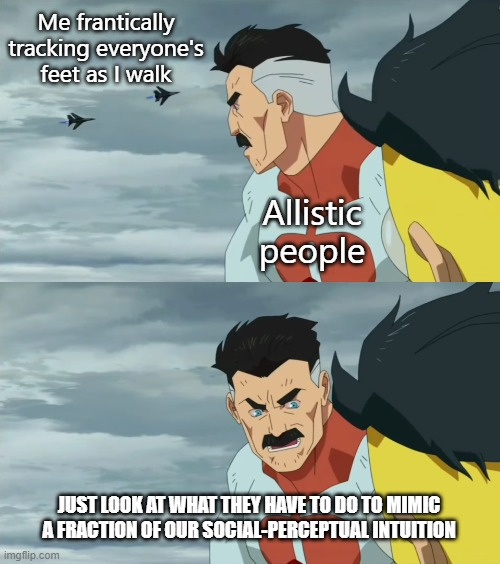
I turned navigating the sidewalk into a kind of a game. I can predict which way people are walking by looking at the position of their shoulders, where their toes are pointing, where they look, and the general trajectory of their bodies. I form a little mental model about all the people around me and I dodge them like Spider Man would dodge blows from a supervillain.
I caught myself doing this recently over 40 years later and it suddenly struck me that most of the people around me don’t seem to put a lot of conscious effort into avoiding others on the street. A little AI supported research later and I realised that allistic people have an intuitive sense of where everyone around them is headed at any given time. They don’t consciously think about people’s feet or the position of their head, shoulders or eyes, they just know.
This has to be my biggest autistic upset so far. I put a lot of conscious effort into smoothly travelling through the world when I am walking on the sidewalk. I am deliberately conscious of everyone around me, the position of their limbs. I actively move my shoulders and feet to get out of their way and I intentionally exaggerate my own movements so other people know where I am headed, but that’s all… conscious. It feels like the “invincible” meme.
Limited working memory
I have always found mental arithmetic difficult. I struggled with my times tables in school. I still to this day at the age of 45, count on my fingers. Yes, my fingers. I hide my fingers at my sides when I do this.
I learnt recently that this is likely an example of my poor working memory. I can’t keep enough information going in my short term memory for me to use it.
I remember at about the age of 16 I compared experiences with a friend of mine in school. I shared that I had always struggled with mental arithmetic but algebra was easy for me. He commented that it was the opposite for him. I think my friend was allistic, his working memory is fine and so the usual mental arithmetic tricks work fine for him. For me though, the consistent rules of algebra were much easier for me to understand and apply than the effort of making the numbers work in my head.
In my last year of high school, despite being in the advanced maths class, I remember sucking really badly at accounting. When I wrote the numbers down, two numbers would often swap positions resulting in little errors that were hard to fix.
There are phone numbers I can remember from my childhood (usually associated with a tune or rhythm). Long term memory is fine, but if you ask me to remember something in the short term, I have to work at it.
If I am walking from one room to another, I will repeat in my head the thing I meant to do over and over again in the hopes that I remember it by the time I arrive in the new room. I know this cognitive reset is common for many people!
Interoception
If my partner isn’t there to “annoy” me, it’s common for me to be working till midnight without noticing the time. I will often skip meals or skip drinking water only to find myself thirsty and hungry later on, with all the avenues for food closed. Without Tim there I will often just “run out of time” to get food, even though I am not doing anything particularly important. I will also often find myself waiting to pee till the last minute and only responding to the urge when it is… you know… urgent.
Context Switching
When I am engrossed in something, or even just trying to focus on one thing, I feel a sharp pang of irritation if someone interrupts me, especially if it’s a social interruption. I have to process the social question and come up with an appropriate response. I have always suppressed that irritation because I recognise it as unreasonable and unfair.
Stimming (stimulation seeking)
It’s a common autistic trope: rocking or flapping your hands, making self-soothing noises. I didn’t think I did this at all, but I started reflecting carefully and was surprised how much stimming I do every day.
At the age of about 13 I started high school, and the stress of the new environment caused me to develop a nervous twitch in my nose. This got so severe that it earned me the rather cute nickname “hamster”. This development alarmed my family so much that they took me to the doctor. The doctor’s solution was to look at me sternly and say “stop it”. So I did. It took conscious effort to stop my nose from twitching. Even today, 3 decades later, I have to focus consciously to not allow my nose to twitch now that I am thinking of it.
Is that a tic or a stim? Not sure if it matters, I think that given I was able to consciously stop, it’s more of a stim. So what do I do instead? Well, at this very moment, you wouldn’t notice it at all! I click my teeth together in a way that makes a pleasant rhythmic noise inside my head. I do this rhythmically and often. Think the tune for “shave and a haircut, two bits” but done over and over very very quickly. Or I might tap out the tune that’s looping in my head. I almost always have a song going on in my head at pretty much all times, and it usually plays over and over.
If you were to notice me stimming at all, it would be jiggling my leg, tapping my foot, tapping my fingers against each other or on a surface, or playing with one of the various pieces of junk I have lying on my desk at any time.
Don’t allistic people do this kind of thing? Yes of course, all people twirl their hair, bite their nails, tap their fingers, get songs stuck in their head. I guess I am just pointing to a pattern of behaviour that links to other things.
One of my most surprising stims is vocal. I will repeat certain phrases whenever I feel uncomfortable or if I have a disturbing thought. The most common one is “I love you” which is certainly better than others I could think of. I also sing silly songs out loud either to myself or my partner. Most of the songs consist of popular songs where I have replaced the words with the sound “meow”.
I mean, yeah, I am a little eccentric, probably not only because of the autism, but it’s clearly part of it.
Defined roles & rules
I love parties. I love hosting parties and social gatherings. In fact, I prefer to host parties than attend them. This is because I can control the environment and my role. So what I tend to do is host cocktail parties and take the role of bartender. I will dress for the occasion and stand behind the bar taking orders.
This is a trick which I have created on purpose because it means all interactions are semi-scripted. I can ask “what will you have…” and expect a scripted response. I can walk up to everyone and ask them if they need a drink or if they are having a good time and not get drawn into any complicated conversations. I also have an excellent excuse for never being able to talk long “sorry, I have to go make a drink…”
The worst part of being a bartender is I don’t like it when people say “surprise me”. This is an example of struggling with the executive function required to come up with an appropriate drink and satisfy the person who has requested something without a well defined outcome they want.
Special Interests
It’s a common trope that autistic people are fascinated by trivial bits of information. Will spend a lot of time researching about things like trains, stamps, coins, or 18th century French literature.
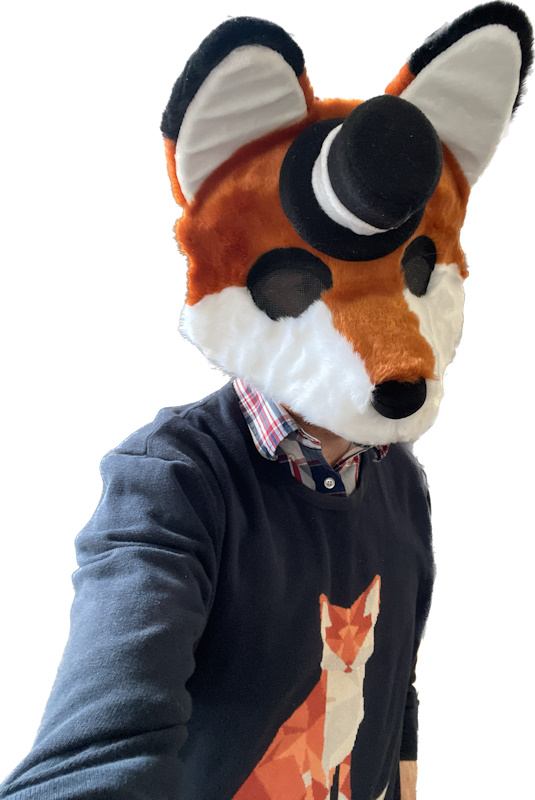
I don’t know if I have any special interests apart from my specific infatuation with foxes. My family know that any fox themed gift will be well received, my house is festooned with fox themed things. In the “furry fandom” I have found a welcoming, queer friendly, autism friendly community. I have found people mostly like me. Some friends have jokingly declared that being a “furry” should be the first question on the autism diagnosis questionnaire.
Conclusion
All of these little stories speak to something different about how I process information. I don’t think it’s super pronounced for me, but I think it’s enough that it has a cumulative impact on my life. I don’t think this new information about myself makes me special, but I do think autistic people are cool and interesting.
It would be reasonable to ask what the point of this information is, given I have been doing pretty well for myself the last 45 years. The answer is in that idea of masking and perhaps taking some of the load off. I take on a lot of responsibility for making all social interactions smooth. For doing everything well, for performing like a human in front of everyone I know.
Now that I know this extra work is not something everyone else has to do, I have a choice to maybe dial it back a bit. Maybe be less engaging in conversation. Maybe cut conversations off sooner, maybe just be a little bit more myself without worrying about having to control everything around me.
When I came out as gay, it was very important to me that it was something I had no control over, so that way it wasn’t my “fault”. It was a natural thing that I couldn’t choose to ignore. I now believe that sexuality, like all aspects of who we are, is complex, and you can choose a lot of how you express yourself, but how much “control” you have over who you are is not as important as who you are.
I like being gay, and I like being autistic. I like being able to learn and grow to become a better person, but I don’t think being a better person means giving up any of these specific parts of myself, and I’m glad to learn about how I consciously integrate all parts of myself into the whole.
Beyond Devastated
Content warning: Suicide
“Next time when we catch up… let’s make it an experience thing, let’s do an escape room or go bowling or something.”
That was the last thing J said to me in person on Friday after lunch. We hugged and then the next Tuesday I heard he was dead. Suicide, according to what people have told me.
J is the 5th friend to take their own life, most of them (like J) never gave any hint as to what was happening. C, M, R, H & J.
Someone suggested J had succumbed to a “moment of weakness” but I strongly dismiss that. People who commit suicide are not weak, they were strong. They were strong to last as long as they did with whatever it was that was gnawing away at them. Strong enough to pretend that there wasn’t this huge blackness looming over them and their lives, but just not enough strength, in that moment, to reach out for help.
It’s natural to turn the lens inwards at this time and think about what you could have done differently. Three of us had coffee last Friday. J had reached out uncharacteristically looking to catch up for coffee (was that a sign?) I spent over 2 hours with him at lunch and we talked about everything from AI to relationships. He declared my technology advice rubbish but the relationship advice useful.
I put my hand on his shoulder, looked him in the eyes and told him: “you are an intelligent, thoughtful, attractive, hard working and above all interesting person and the right person will come along for you, all the best relationships in my life have happened after I spent time on myself, on caring for myself, on what I wanted. One day you’re going to make someone very happy”.
I didn’t say that because he seemed down, more to the contrary, he was talking about future plans and aspirations, the kinds of things he wanted out of life. None of it seemed far fetched or unattainable. I said it because I wanted him to understand his value as a person. How important he was to me as a friend. I even affirmed that. I told him how grateful I was to know him, that he meant a lot to me.
I have no idea why my friend took his own life and I don’t think I will ever know. I also don’t think I will ever know what words I could have said, things I could have done, promises or bargains I could have made to change the course he had chosen.
So all I can feel right now is this unfocused sadness and rage. Sadness at a brilliant little point of light in our world snuffed out way too soon. Angry just at the world and our crushing reality where someone can be driven to the point where that is their only option. I want to break open the clouds of Heaven, shake my fist at God and call Him a monster.